
Light is one of the most critical factors in plant development. Over the years, extensive research has shown that exposing plants to different colors of light positively impacts their entire growth cycle. This knowledge has led to the widespread adoption of full spectrum LED grow lights, now considered a standard solution for modern indoor cultivation.
While certain wavelengths play a more direct role in photosynthesis, the remaining parts of the light spectrum are equally important in supporting balanced, healthy plant development.
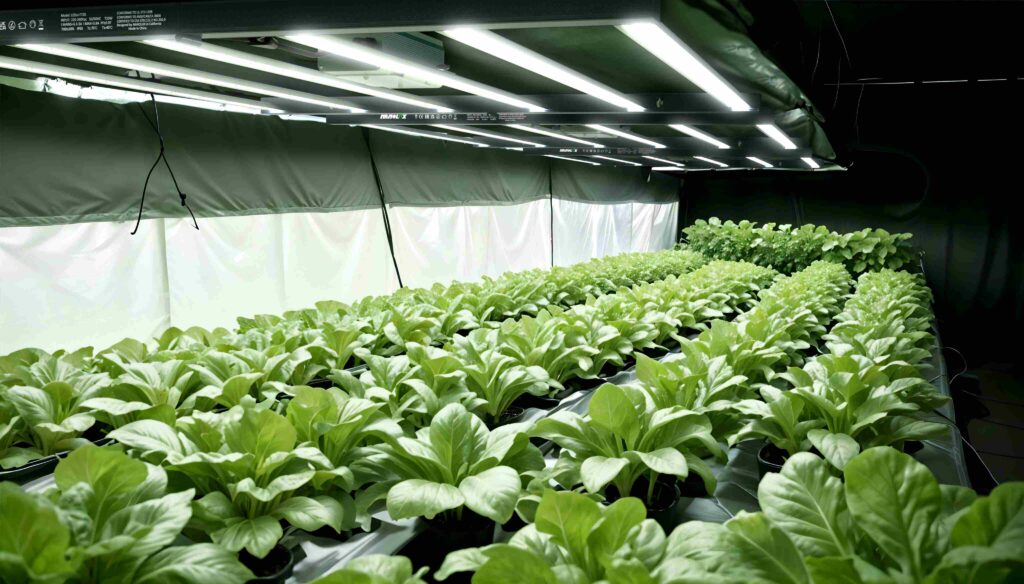
Why Light Spectrum Matters in Indoor Growing
Indoor cultivation has expanded rapidly in recent years, largely due to advances in LED lighting technology. These systems are designed to closely replicate the spectrum of natural sunlight, enabling plants to carry out photosynthesis efficiently even in fully controlled environments.
By studying how sunlight affects plant physiology, growers and scientists have been able to create artificial lighting environments that promote stronger growth, denser foliage, and healthier plants—while also reducing exposure to harmful environmental factors.
Understanding how different light colors affect plants allows growers to optimize growth conditions and achieve more consistent results.
Does Plant Growth Change Under Different Light Colors?
Yes—plant growth is directly influenced by light color. As long as plants receive a sufficiently broad and balanced light spectrum, they can absorb the energy needed to grow and thrive.
Plants are unique in their ability to produce their own food through photosynthesis. Light acts as the primary energy source that powers this process, making it essential for growth, development, and overall vitality.
In outdoor environments, this energy comes from sunlight. In indoor or controlled settings, plants rely on artificial lighting that delivers specific wavelengths of light. Each color within the visible spectrum carries a different wavelength and energy level, contributing in its own way to plant development.
Shorter wavelengths, such as violet and blue light, deliver higher energy, while longer wavelengths like red light provide lower energy but play an equally vital role in plant physiology.
The Importance of Light Intensity
Beyond color, light intensity is just as important. Plants require an adequate amount of light—not too little and not too much.
Proper light intensity ensures:
- Efficient photosynthesis
- Strong stems and leaves
- Healthy chlorophyll production
- Rich green coloration
Insufficient or excessive light can disrupt growth and lead to visible stress symptoms.
Signs Your Plants Are Not Getting Enough Light
Plants clearly reflect lighting issues through their appearance. Common indicators of low light levels include:
- Slower-than-expected growth
- Small or underdeveloped leaves
- Yellowing due to reduced chlorophyll production
- Leaning or stretching toward the light source
- Increased spacing between leaves
On the other hand, excessive light may cause:
- White or bleached spots on leaves
- Leaf curling or wrinkling
- Reduced leaf size
Understanding these signals helps growers adjust light distance, intensity, or spectrum as needed.
Light Wavelengths That Support Plant Growth
Although blue and red light are often considered the most important, plants benefit from the entire visible light spectrum—just as they do under natural sunlight.
Here’s how different wavelengths contribute to plant growth:
- Blue Light (450–495 nm): Promotes vegetative growth and supports strong photosynthesis
- Red Light (620–720 nm): Encourages leaf development and supports reproductive processes when combined with blue light
- Green Light (495–570 nm): Penetrates deeper into the plant canopy and supports overall energy balance
- Violet Light (380–450 nm): Enhances plant color, aroma, and overall quality
- Yellow Light (570–590 nm): Plays a secondary role and supports spectrum balance
Each wavelength contributes to a more complete and efficient growth environment.
What Is the Best Light Color for Plant Growth?
Blue light is widely recognized as essential for vegetative growth, especially when paired with red light for balanced development. Violet wavelengths further enhance plant quality, influencing characteristics such as color and aroma.
However, focusing on only one or two colors can limit plant potential. For optimal results, plants require a full spectrum of light that mirrors natural sunlight as closely as possible.
Growers may choose to emphasize certain wavelengths at specific stages, but this should always be done with an understanding of the trade-offs involved.
Choosing the Right Grow Light
Just as sunlight provides plants with a complete spectrum, the best artificial grow lights are designed to do the same. Today’s full-spectrum LED grow lights offer flexible, energy-efficient solutions that support every stage of plant growth.
Why LED Grow Lights Are the Preferred Choice
LED grow lights are widely recommended because they:
- Deliver a balanced, full-spectrum output
- Allow precise control of light color and intensity
- Adapt easily to different plant types and growth stages
- Consume less energy and generate less heat
By adjusting individual wavelengths, growers can enhance specific plant traits such as growth rate, yield, or quality—without relying heavily on chemical inputs.
Final Thoughts
Plant growth under different colors of light is not only possible—it is essential for achieving strong, healthy results. A well-designed lighting system that delivers the full visible spectrum allows plants to develop naturally, efficiently, and sustainably.
With modern LED technology, growers can now recreate the benefits of sunlight indoors, unlocking higher performance and greater control over plant growth than ever before.
