
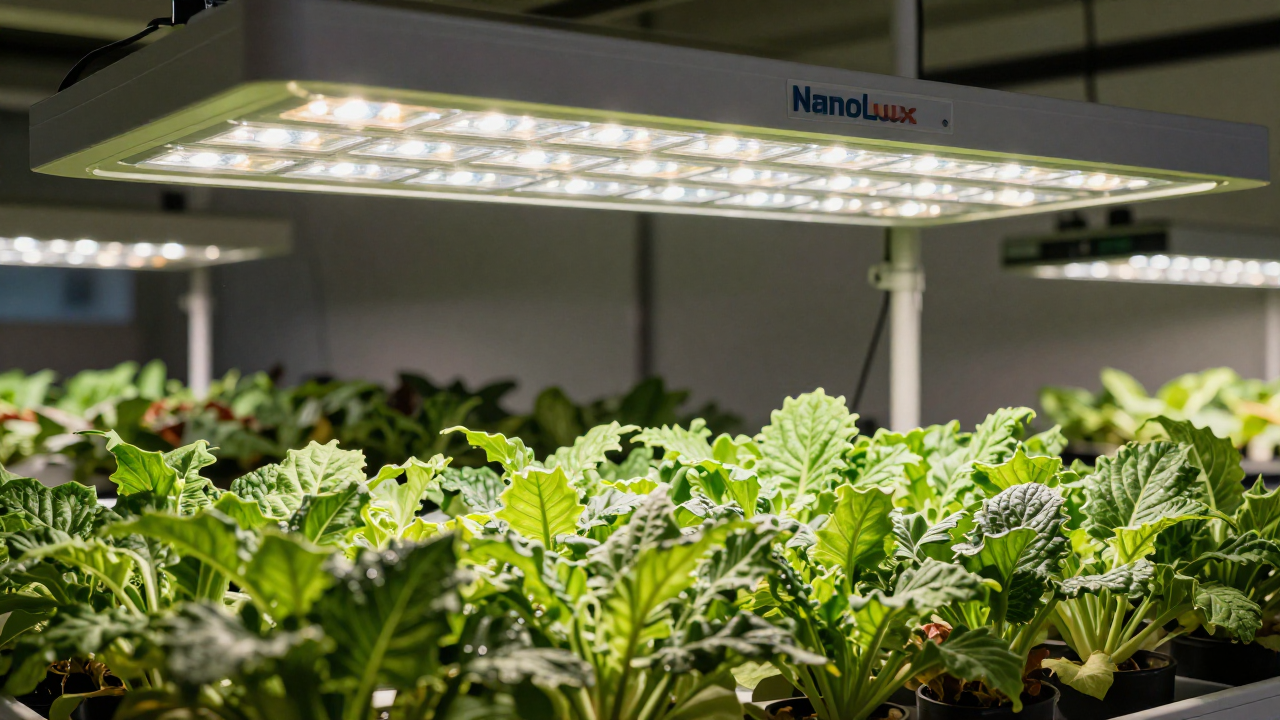
The Day the Power Bill Hit $4,200
On November 12, 2025, Dave Thompson sat in his truck outside a warehouse in Ames, Iowa, staring at a monthly utility statement that made his jaw clench. He’d been running a 15,000-square-foot greenhouse operation for seven years—mostly leaf lettuce, basil, and microgreens for regional grocery chains. His HPS overhead lights pulled 1,000 watts per fixture, 68 units running 16 hours a day. The grow was profitable, but every time propane season rolled around and electricity rates spiked, his margin got chewed to the bone. That November bill came in at $4,203, up 31% from the prior year. He’d been nursing the idea of switching to LED commercial grow lights since 2023, but had never pulled the trigger because “stuff was still working.” That bill cracked the status quo wide open.
I remember the call. January 2, 2026, 7:15 a.m. Pacific time—we’d barely finished coffee in the Nanolux support queue when Dave’s number lit up. He didn’t want a pitch. He wanted someone to walk him through the math without the glossy brochure nonsense. Not going to lie, that kind of call always makes me nervous, because once you pull back the datasheet curtain, you expose every design compromise you made. But it’s the only way an operator like Dave trusts you.
What happened over the next four months rewired how I think about selling commercial grow lights—and it should reshape how you buy them.
The Real Numbers on Commercial Grow Lights That Most Buyers Ignore
When Dave started comparing fixtures, the first trap he nearly stepped in was wattage equivalence claims. A distributor told him a 640W LED “replaces a 1000W HPS and gives you the same light.” Technically, that’s like saying a pickup truck and a sedan both hit 65 mph. The question is *usable light on the canopy*, not wall-plug draw.
We locked in on three metrics that actually matter:
Here’s a comparison we roughed out for him on a whiteboard that ended up taped to his headhouse door for two months. I’ll clean it up in a table because frankly, a photo from my phone would be illegible.
Dave ran the utility rebate calculator himself. In Iowa, MidAmerican Energy’s 2026 custom incentive program would cover 32% of the fixture cost if he met DLC Horticultural Premium requirements. That’s a detail that gets glossed over in online reviews. Without a DLC listing, you’re leaving a $4,000+ check on the table for a typical 50-fixture swap.
A Quick Decision Tree Before You Sign the Purchase Order
If you’re wading through the commercial grow lights mess, here’s the mental flowchart I sketched for Dave—and I’ve since handed it to three other greenhouse operators in the Midwest.
Are you retrofitting an existing structure or building new?
What’s your dominant photoperiod crop?
Do you need zoning control?
I’m skipping the part about comparing wattage because if you’re still choosing lights based on “pulls x watts,” you might be better off calling a broker and letting them handle it. Not trying to be rude—just that the industry has moved past that metric since 2018.
Five Mistakes I See Every Season (Dave Dodged Three, Stepped in Two)
Even the sharpest operators mess up. Dave was no exception, but he was quick to correct. Here’s what he learned:
1. Assuming the photoperiod response from HPS carries over 1:1 to LED.
His lettuce stretch habit changed in week one because the old HPS spectrum had a ton of far-red that suppressed phytochrome-mediated stem inhibition. Under the higher red:far-red ratio of the first LED spectrum, the plants stayed squat. He had to reduce day length by 30 minutes. Not a disaster, but he lost a harvest cycle calibrating.
2. Ignoring humidity after removing radiative heat load.
HPS fixtures dry out the air. LED doesn’t dump the same infrared down onto the leaves, so his nighttime VPD spiked. In February 2026, he saw tip burn in 12% of his butterhead crop. The fix was adding a simple fogging system that cost $900, but he needed to catch it early. If your dehumidification strategy hasn’t been re-evaluated, assume your transpiration rates will drop until proven otherwise.
3. Buying based on a single PPFD measurement at 18 inches center.
We’ve all seen the marketing maps that look like a beautiful climate chart. Dave borrowed a spectrometer from the local extension office and measured his own grid. The budget fixture he tested had hot spots right under the bars and low spots at the inter-fixture seam. The variance was 31%, nullifying any energy savings because he’d have had to run longer hours to hit edge DLI targets. He sent that fixture back.
4. Skipping the DLC listing verification before rebate paperwork.
He almost did this. The distributor said “energy efficient” but didn’t produce the listing number. I made him call the utility before mounting a single light. Turns out the competitor model had expired DLC certification in Q3 2025. Without that piece of paper, the rebate vanishes.
5. Underspending on the controller, then retrofitting it twice.
He initially used the basic onboard timer included with the fixtures. Two months in, he needed to shift schedules for a new celery trial and had no way to do it without climbing ladders. We upgraded him to a zone controller that managed 0-10V dimming based on cloud sunrise data. You know that feeling when you realize you’ve saved $400 and blown $2,000 in labor? That.
How Dave Got Back to Break-Even in 6 Months
April 2, 2026, Dave’s operation hit a milestone: the cumulative savings on electricity and the reduction in corky root losses (linked to lower leaf temperature from LED spectra) finally offset the full capital expenditure. Not counting the rebate, it took 6.1 months. Adding the MidAmerican rebate, his payback was 4.2 months.
Run the numbers with me:
Now, here’s where some folks slip. They see “9% yield boost” and think it’s a universal truth. It’s not. It’s a correlation with Dave’s particular SPAD values, his water-quality inputs, and the genetics he selected over years. Another grower in Missouri with a different substrate mix might see half that.
Advanced Tweaks That Squeeze Out the Last 15%
Dave got curious in May and started playing with spectral timing. He’s using our fixture’s auxiliary far-red channel to run a 30-minute end-of-day treatment at 15 µmol/m²/s of 730 nm. This lets him push photoperiod extension without raising the core PAR intensity—so his electricity costs stayed flat while he shaved 3 days off the vegetative phase of his lettuce in the DWC line.
He also integrated the lighting schedule with a soil moisture sensor network sourced from a local startup. The logic is: if VWC drops below a threshold during peak light hours, dim the lights 8% instead of dumping more water and risking pythium. It’s a weird marriage of sensors and spectrums, but it’s the kind of thing you can only do when your commercial grow lights talk the same language as your irrigation controller. About half the off-the-shelf bargain fixtures can’t accept that kind of external input.
One thing I’d warn about: far-red supplementation in the post-harvest treatment window can backfire if your cold storage doesn’t bump humidity down fast. We saw a 2% increase in botrytis in Dave’s first trial batch because the extended red signal kept stomata open too long in the cooler. He adjusted by cutting the treatment 10 minutes shorter and adding a quick fan-drying step before boxing. Problem solved, but if you don’t have the cold-chain bandwidth, just run standard wavelengths.
Where This Leaves You
Dave’s operation isn’t a controlled ag research center with a seven-figure grant. It’s a working greenhouse with a concrete floor, a 2007 Ford pickup that leaks oil, and a head grower who brews his own kombucha. What changed was he refused to treat lighting as a commodity purchase. He approached it like buying a tractor: stress-test the numbers, demand the actual photometric files, call the utility before the vendor, and accept that you will screw up the first two weeks of a new spectrum because biology doesn’t read spec sheets.
If you can find fixtures with a wide enough output window and a ballast that doesn’t fry in a humid Midwest July, you can chase down the rest. We’ve been manufacturing in this segment since 2004, and the one thing that still trips me up is how many growers over-weigh upfront fixture cost and under-weigh the cost of a missed harvest window. If you’re standing in a greenhouse at 6 a.m. wondering whether to pull the trigger on a lighting retrofit, start with your utility bill from six months ago. Not the marketing cheat sheets.
