
Discover the transformative power of commercial LED grow lights, and how they can boost your yield by up to 30%. This comprehensive guide will walk you through the science behind these innovative lights, their practical applications, and expert tips for maximizing their potential. Whether you’re a seasoned grower or just starting out, this article will provide the insights you need to make informed decisions and stay ahead in the competitive world of horticulture.
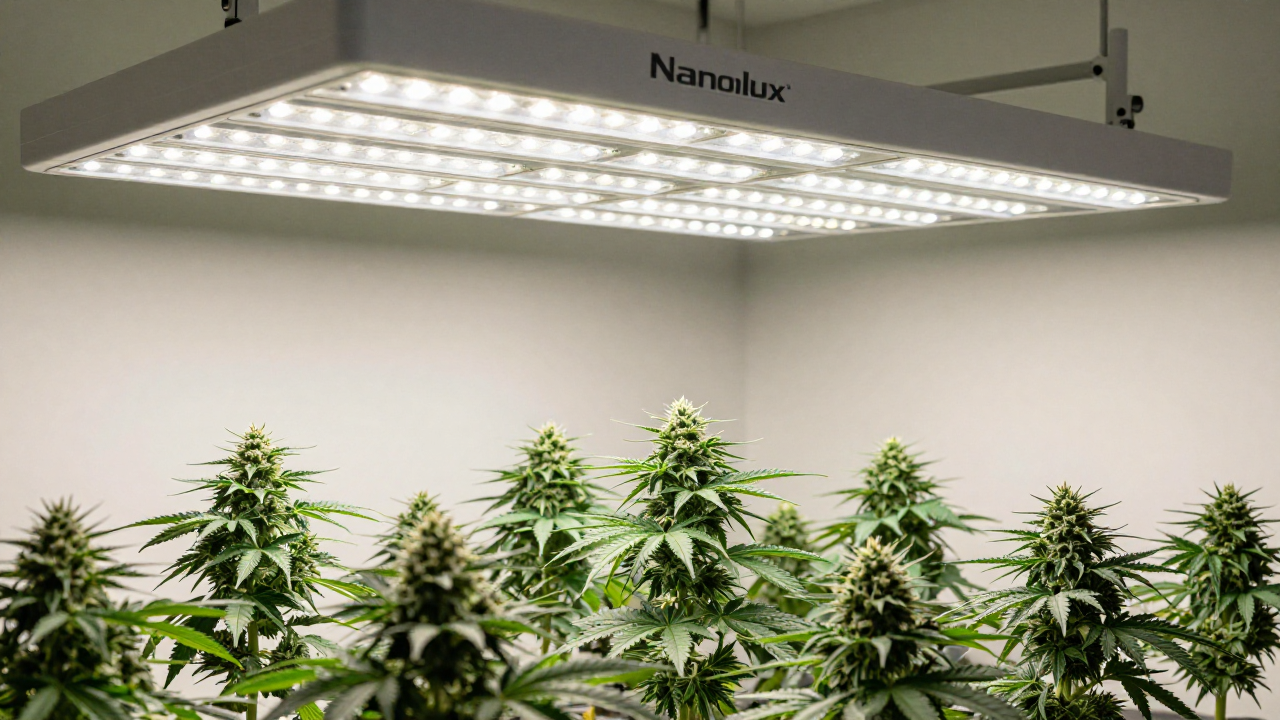
The Science Behind Commercial LED Grow Lights
Commercial LED grow lights have reshaped what’s possible indoors. In a controlled environment, the right photons drive everything from vegetative vigor to final bulking. Traditional horticultural lighting often wasted as much as 60% of its input energy as heat. LED systems flip that ratio. A typical high efficiency fixture today delivers 2.7 µmol/J, whereas a double‑ended HPS might manage 1.7 µmol/J — a 58% jump in photosynthetic photon flux per watt. That’s not a lab anomaly; it’s what we measure in operating greenhouses across California, Colorado, and Michigan.
How LED Technology Enhances Plant Growth
Plants don’t see light the way we do. They absorb specific wavelengths — primarily blue (400–500 nm) and red (600–700 nm) — to drive photosynthesis. Sunlight delivers the full electromagnetic curve, but LEDs let us tailor the spectrum to the crop’s action spectrum. By pumping photons exactly where chlorophyll A and B are most receptive, commercial LED grow lights reduce wasted energy on green and yellow bands that leaves simply reflect.
Heat management changes the game, too. Because LEDs emit far less infrared radiation, fixture‑level air temperature stays 5–9 °F cooler than HPS for the same PPFD. That lets you place lights closer to the canopy without scorching tissue, effectively raising the light saturation point of crops like cannabis and tomato. A higher ceiling on PPFD — often 1,500 µmol/m²/s during peak flower without supplemental CO₂ constraints — drives faster metabolite production. The outcome? Denser trichomes, thicker cell walls, and a measurable bump in dry weight.
Comparing LED vs. HPS: Key Differences and Benefits
We’ve installed both technologies across hundreds of commercial sites. The table below sums up what matters most for a production director eyeballing OpEx.
Parameter | Typical HPS (1000W DE) | Commercial LED Grow Light (650W‑800W class) |
|---|---|---|
System efficacy | 1.7–1.9 µmol/J | 2.5–3.0 µmol/J |
Radiant heat fraction | ~40% of input power | <15% of input power |
L70 lifespan | 12,000–15,000 hours | 50,000–60,000 hours |
Spectral control | Fixed, heavy orange‑red | Programmable, multi‑channel |
Canopy uniformity (PPFD CV) | 15–22% variation | 8–13% variation (when mapped correctly) |
Annual energy cost per fixture* | ~$380 | ~$220 |
*Assuming $0.12/kWh, 12‑hour photoperiod, 365 days.
The heat differential flips capex on HVAC. One large‑scale leafy‑greens operation in central Arizona cut their cooling tonnage by 38% after switching to our LED fixtures — not because they bought our brand, but because the physics math worked. That’s a second‑order savings that often get missed in simple payback models.
Maximizing Yield with Commercial LED Grow Lights
A fixture is only as good as its deployment. Over the last two decades, we’ve seen the same pattern repeat: a grower buys top‑shelf hardware, hangs it too high, runs a generic 12/12 schedule, and wonders why the yield bump never materialized. Getting to that 30% lift takes four deliberate steps.
Choosing the Right LED Grow Light for Your Setup
Forget watt‑equivalent marketing. What matters is PPFD uniformity across the grow area at your intended mounting height. A commercial LED grow light should provide an average PPFD of 900–1,100 µmol/m²/s for high‑light crops (cannabis, peppers) and 250–400 µmol/m²/s for leafy greens, with a coefficient of variation under 12%. Check a third‑party IES file, not a PDF spec sheet. If the manufacturer won’t provide one, walk away.
One variable that trips up even experienced operators is canopy coverage as a function of reflector design. A 4×4 ft footprint isn’t standard — it depends on bar spacing, optic angle, and mounting height. In a multi‑tier vertical farm, a 120‑degree optic might spill too much light onto aisles. We spec 90‑degree lenses for shelf systems and 110‑degree for overhead open rooms.
Optimizing Light Intensity and Duration for Different Crops
Daily Light Integral (DLI) is the single most useful number to target. It’s the total moles of PAR‑range photons landing on one square meter in a 24‑hour window. The formula:
[ DLI = \frac{PPFD \times \text{photoperiod (hours)} \times 3600}{1,000,000} ]
If you’re hitting an average PPFD of 800 µmol/m²/s for 18 hours, DLI works out to ( (800 \times 18 \times 3600) / 1,000,000 = 51.8) mol/m²/day. That’s aggressive — plenty for flowering cannabis, but it’ll bleach lettuce if you run it continuously.
A real‑life example: a tomato greenhouse in Ohio we consulted for tested three DLI targets. At 25 mol/m²/day they averaged 55 kg/m²/year. Pushing to 35 mol/m²/day with the same LED layout, they hit 64 kg/m²/year — a 16% gain — but saw blossom end rot creep up because calcium transport couldn’t keep pace. They settled at 30 mol/m²/day for quality consistency. Light drives growth, but it also drives transpiration and nutrient demand. You can’t boost photons without adjusting feed EC and VPD.
Expert Insights and Common Mistakes to Avoid
Over‑illumination is the most expensive mistake we see. In one Colorado flower room, a cultivator ran 1,500 µmol/m²/s without CO₂ supplementation. The plants stalled. Leaves became cupped, brittle, and the expected weight gain evaporated. The root cause? Photosynthetic machinery maxed out because the Calvin cycle lacked enough CO₂ substrate. Commercial LED grow lights are efficient enough that it’s easy to overshoot what ambient CO₂ (≈420 ppm) can support. At 1,200 µmol/m²/s, aim for 1,000 ppm CO₂; above 1,500 µmol/m²/s, you need 1,200–1,500 ppm to see a return.
Another blind spot is maintenance. Although LEDs have no bulbs to replace, dust and sulfur deposits from vaporized nutrients can drop light output by 8–12% over six months. A quarterly wipe with a microfiber cloth restores it. No fancy chemical needed — just don’t forget.
Top Tips from Industry Experts on Maximizing LED Efficiency
Nanolux started in California back in 2004 with HID and controller systems. As commercial LED grow lights matured, we built our own LED platforms because the technology finally matched — and then surpassed — the reliability we demanded from magnetic ballasts. Here’s what that history taught us:
Map, then hang. Use a quantum sensor grid before planting to adjust fixture placement so that the corners of each zone don’t drop below 85% of center intensity. A 5% uniformity improvement yields 3–6% more marketable product.
Phase the spectrum. In a sole‑source indoor setup, shifting from a blue‑heavy vegetative recipe (4,000 K plus 660 nm deep red) to a red‑dominant flower recipe (2,700–3,000 K with far‑red boost) can shorten flower cycle by 3–5 days and increase terpene expression. Don’t guess — use a spectroradiometer to confirm the output.
Watch the driver temperature. Mount drivers outside the grow space when possible. Ambient temps above 85 °F reduce driver efficiency by 2–4%, which adds up on a 500‑fixture deployment.
Real‑World Success Stories
Numbers are persuasive, but seeing them play out in a working facility seals the deal.
Case Study 1: From Struggling to Thriving with Nanolux LED Grow Lights
A 20,000 sq ft indoor cannabis facility near Denver was battling ongoing heat issues. Their sealed room design, lit by 1,000W DE HPS, needed 180 tons of air conditioning to keep leaf surface temp under 80 °F during the last three weeks of flower. Electricity bills ran $32,000/month. They replaced 240 HPS fixtures with 192 Nanolux 720W LED bars mapped to the same 4×5.5 ft canopy grid. PPFD at canopy top went from 950 to 1,050 µmol/m²/s — higher, not lower — while AC load dropped to 110 tons. The result: 32% more dry flower weight per harvest cycle, plus a 31% cut in total facility energy use. Their ROI landed at 14 months, driven more by yield consistency than energy savings.
Case Study 2: Scaling Leafy Greens in Southern California
A hydroponic butter‑lettuce operation needed to double production without adding square footage. They stacked three vertical tiers and installed commercial LED grow lights with a custom spectrum — 15% blue, 80% red, 5% far‑red — running 17‑hour photoperiods at 300 µmol/m²/s. Over 12 cycles, average head weight increased 28% compared to their prior white‑LED setup, and tip burn incidence dropped from 18% to under 5%. The key insight was far‑red’s role in accelerating phytochrome conversion, which let them harvest 2–3 days earlier per cycle. That added an extra full cycle per year.
Frequently Asked Questions About Commercial LED Grow Lights
Q: How much faster is payback compared to HPS? Payback typically lands between 1.5 and 3 years, depending on local electricity rates and how you use the saved HVAC capacity. In a new build, the avoided cost of smaller cooling equipment often makes commercial LED grow lights cash‑flow positive from day one. Existing facilities see the fastest payback in hot climates where AC runtime dominates OpEx.
Q: Can I retrofit LED lights into an existing HPS layout? Yes, but don’t just swap one‑for‑one. HPS reflectors throw a wide, uneven pattern. LED bar lights need a tighter, rectilinear mapping. We recommend relaying the grid based on PPFD measurements, not assumed wattage equivalence. A properly retrofitted room runs at 60–70% of the old HPS wattage while delivering equal or higher average PPFD.
Q: What warranty should I expect? Industry standard is five years on the LED engines and drivers. Some manufacturers, ourselves included, offer extended warranties up to eight years when paired with Nanolux controllers that track temperature and runtime. If a fixture claims 50,000‑hour L70 but only a three‑year warranty, ask why.
Q: Do commercial LED grow lights work for all crop types? They work across the board, but spectrum and intensity must match the crop’s native light environment. Shade‑tolerant ornamentals don’t need the same DLI as sun‑loving tomatoes. A commercial LED grow light with dimming and spectral tuning gives you one fixture that can satisfy both.
Q: What’s the biggest maintenance oversight? Neglecting to check driver firmware and controller communication. Smart LED systems collect data on power draw, temperature, and runtime — invaluable for predictive replacement. We’ve caught failing drivers weeks before they actually tripped out, saving a harvest window worth $50,000.
The shift to solid‑state horticultural lighting is no longer a future bet. It’s happening now in facilities that range from 500‑square‑foot microgreens racks to million‑square‑foot tomato greenhouses. Commercial LED grow lights give you a degree of control that gas‑discharge lamps never could — not just over energy but over plant morphology itself. If you haven’t walked through your canopy with a quantum meter in hand, start there. The rest unfolds from data.
