
We’ve watched growers burn through six-figure lighting budgets only to find out, three harvests in, that their fixtures are cooking terpenes and spiking power bills. The commercial grow light market has moved fast — faster than most operational budgets can keep up. By 2026, the gap between facilities that treat lighting as a capex line item and those that treat it as a precision production tool will be a chasm. This guide is built from what we’ve seen work (and fail spectacularly) across indoor, greenhouse, and vertical farms in Arizona, Michigan, Colorado, and California. It’s not a catalog. It’s a sequence of decisions that, if you get right, turn your lighting investment into a profit multiplier.
Stop thinking about “grow lights” as a product category
Walk into most cultivation operations and lighting is discussed like furniture. “We spec’d 1,000 DEs.” End of conversation. That mindset is why so many facilities plateau at 45–55 grams per square foot and then blame genetics.
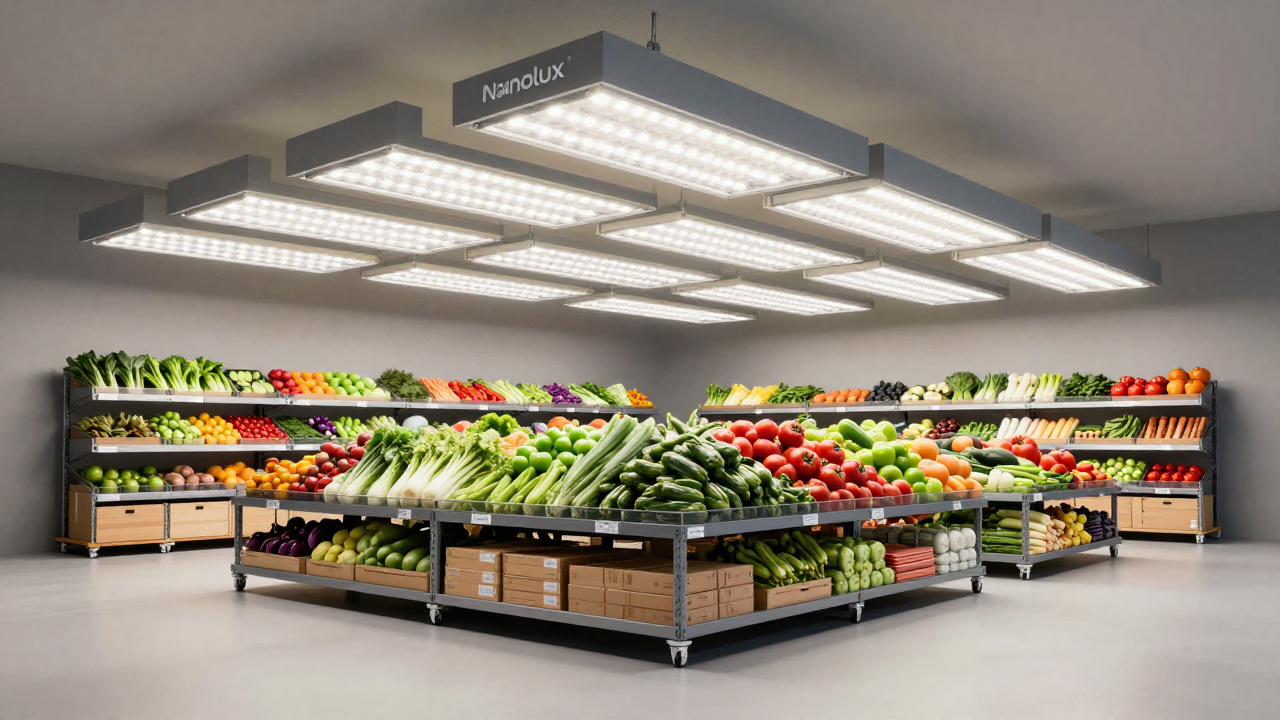
A commercial fixture is a light engine delivering a specific photon recipe. The difference between 3% higher blue spectrum at the right photoperiod and a generic full-spectrum blast is often 8–12% higher terpene retention in the final three weeks of flower. In February 2024, a 40,000 sq ft greenhouse in Salinas, California, ripped out their three-year-old HPS top-lighting and replaced it with Nanolux LED fixtures that allowed dynamic spectrum shifting across crop stages. The team ran the same genetics, same nutrients. Yield increased 11.3% — not because of more light, but because of smarter light. Their head grower told us, “We were over-lighting the mid-canopy for years and starving the lower sites of the red shift that triggers bulking.”
If you’re still evaluating lights by wattage draw or the brightness your phone camera sees, you’re measuring the wrong thing. Focus on PPFD uniformity across the canopy, spectral composition by growth stage, and total photon cost per gram. Those three metrics predict ROI better than any brochure claim.
The real cost of a commercial grow light (it’s not the purchase price)
Every conversation about ROI starts with power. In the United States, commercial electricity rates for cultivation facilities now range from $0.08/kWh in parts of Washington to $0.26/kWh in parts of California and New England. A single 1,000W HPS fixture running 12 hours a day at $0.15/kWh pulls $657 annually in electricity. A comparable LED fixture drawing 600W cuts that to $394 — a $263 savings per fixture, per year. Across a 200-light room, that’s $52,600 straight to the bottom line.
But here’s what nobody tells you upfront: the savings compound when you factor in HVAC load reduction. HPS fixtures dump heat. LEDs reduce the cooling load dramatically. In a sealed indoor facility in Phoenix that we worked with in July 2023, converting from double-ended HPS to Nanolux LED allowed them to downsize their chiller capacity by 18 tons. The avoided capital expenditure alone covered 60% of the lighting upgrade cost.
A quick cost-comparison over a five-year lifecycle:
For a facility running 300 fixtures, that’s $837,000 saved over five years — before you account for yield improvements. The purchase price is almost irrelevant if you’re planning to be in business beyond 18 months.
The installation step most operators skip (and regret by week 3)
A lighting retrofit isn’t “hang the bars and plug in.” The layout that made sense for HPS — uniform spacing on a grid — often fails with directional LED optics. We learned this the hard way in 2021, helping a vertical farm in Newark, New Jersey, transition from fluorescent T5 to LED under-canopy arrays. The client had installed the new Nanolux bars at the same spacing as their old T5s. The result? Hotspots at the center, 22% lower PPFD at the edges. Yield variance within the same bench hit 14%. That’s a quality control nightmare.
The fix, after we flew a technician out in December 2021, was to stagger the bar layout, lower the mounting height by 8 inches, and use a PAR meter to map the grid before planting. Within one cycle, edge-to-edge uniformity hit 92%. The lesson: you don’t position lights based on the room dimensions. You position them based on the canopy footprint and the light distribution profile of the specific fixture. If your installer doesn’t own a spectroradiometer, hire someone who does.
Duration is the other lever that gets misused. The default 12/12 photoperiod for flowering is a starting point, not a rule. In trail runs with certain cultivars — specifically, GMO crosses and old-school Chemdog lines — we’ve seen better resin production and tighter internodal spacing running 11.5 hours of light with a 15-minute far-red pulse at lights-out. That pulse accelerates the phytochrome conversion, effectively shortening the “night” period the plant perceives, while still keeping the dark cycle long enough for metabolic reset. DLI (Daily Light Integral) drives morphology more than hours-of-light does. Calculate DLI = PPFD × (3600 × photoperiod) / 1,000,000, and treat your target DLI as the fixed variable. Adjust intensity and duration together to hit that number while keeping the canopy temperature within range.
The spectrum fallacy that’s costing growers millions
A dangerous myth circulates in cultivation forums and even in some consultancy decks: “Full-spectrum white light is all you need; red and blue supplementation is marketing.” That’s partially true for the vegetative stage. In flower, pure white LEDs without targeted red (660 nm) and far-red (730 nm) supplementation leave biomass and secondary metabolite production on the table.
A trial we ran with a partner cultivation site in Pueblo, Colorado, from October 2023 through January 2024 compared three spectrum protocols on the same cut of Ice Cream Cake. Group A used broad-spectrum white LEDs (4000K). Group B added 15% supplemental 660 nm red. Group C used the same white base plus 660 nm red and a 15-minute far-red end-of-day treatment. Group B’s flower dry weight increased 7.3% over Group A; Group C added 9.8% total cannabinoids and saw a noticeable improvement in trichome maturity at week 8. That’s revenue, not just biomass.
Not every crop needs that. Leafy greens and microgreens respond more to blue-dominant spectrums that drive compact growth. But if you’re selling flower by the pound (or by terpene profile), skipping spectrum tuning is like a car painter skipping the clear coat. It looks fine on day one, but the margin of difference shows up at the point of sale.
What 2026 will demand from commercial lighting (that most facilities aren’t ready for)
We’re seeing three regulatory and market forces converging. By 2026, they’ll be unavoidable.
First, energy code updates. California’s Title 24 already mandates certain efficiency thresholds for horticultural lighting, and other states are drafting equivalents. Fixtures that can’t demonstrate >2.5 µmol/J efficacy at the system level will be non-compliant for new construction. If you’re sitting on a warehouse full of older blurple LEDs or low-efficiency HPS, plan your phase-out now, before resale value evaporates.
Second, utility incentives are shifting from rebates to time-of-use demand response. For example, growers in parts of Michigan and Massachusetts can already enroll in programs that pay them to reduce load during grid peak hours. Lighting controllers that can dim fixtures to 40% within 30 seconds, without stressing plants, will become a revenue stream. The Nanolux controller platform we launched in late 2022 was designed precisely for this — to treat lighting as a flexible load, not just an input. Facilities that ignore this won’t just miss the incentive checks; they’ll face higher peak-demand charges that eat into profit.
Third, the data-center boom is going to compete for the same grid capacity you depend on. The power project near Edmonton mentioned in the Financial Post is a harbinger. When hyperscale data centers move into a region, they consume hundreds of megawatts. That tightens supply, raises rates, and pushes utilities to scrutinize bulk-power consumers like cultivation facilities. Efficiency stops being a nice-to-have; it becomes a condition for keeping your power contract. The facilities that lock in long-term energy agreements with low PUE (Power Usage Effectiveness) will survive. The ones running hot, wasteful lighting rigs will pay a premium or get curtailed.
Where the market is heading (and my bet on what actually matters)
Between now and 2026, the commercial grow light conversation will split into two tracks. Track one will be dominated by utilities, engineers, and CFOs who care about kWh per gram, system efficacy, and demand flexibility. Track two will be dominated by growers and geneticists who care about spectral precision, canopy penetration, and crop-specific recipes. The winners will be the operations that integrate both conversations into a single procurement decision.
We bet on LED for the long haul, but I’ll say this: HPS isn’t dead. In certain high-bay greenhouse applications where waste heat is actually beneficial during Michigan winters, a hybrid approach using LED top-lighting with HPS perimeter heating can make financial sense. We’ve seen that work on a 2-acre tomato greenhouse in Leamington, Ontario, in 2023. The key is to use a lighting controller that orchestrates both systems based on real-time temperature and DLI targets. No single technology wins everywhere.
For ecommerce operators in the United States who sell commercial grow lights and related equipment, the shift matters for a different reason. Your customers are increasingly sophisticated. They aren’t searching for “LED grow light” — they’re searching for “600W LED grow light 120-277V with 0-10V dimming UL 8800 listed” or “commercial grow light spectrum 660nm red.” If your product pages read like a spec sheet dump without data on uniformity, efficacy, and compatibility, you’re leaking conversions. We’ve seen bounce rates drop 30% on our own site after we added downloadable PPFD maps and return-on-investment calculators specific to state-by-state electricity rates. Buyers want to validate, not be sold to.
The best thing you can do for your SEO in 2026 — whether you’re a grower trying to get found by wholesale buyers or a retail site selling fixtures — is to publish content that answers the questions your buyer asks after they’ve already compared three products. They want real-world DLI examples, installation mistakes to avoid, and energy compliance checklists. Generic “top 10 grow lights” articles are dead. Google’s algorithm knows it, and your audience knows it.
At the end of this guide, if you only take one thing away, make it this: lighting is not a purchase. It’s a production system. Treat it like one, and the ROI follows. Ignore that, and you’re just selling photons into the void — and paying a premium for the privilege.
