
Commercial Grow Lights Are Failing Half of America’s Indoor Farms—Here’s Why
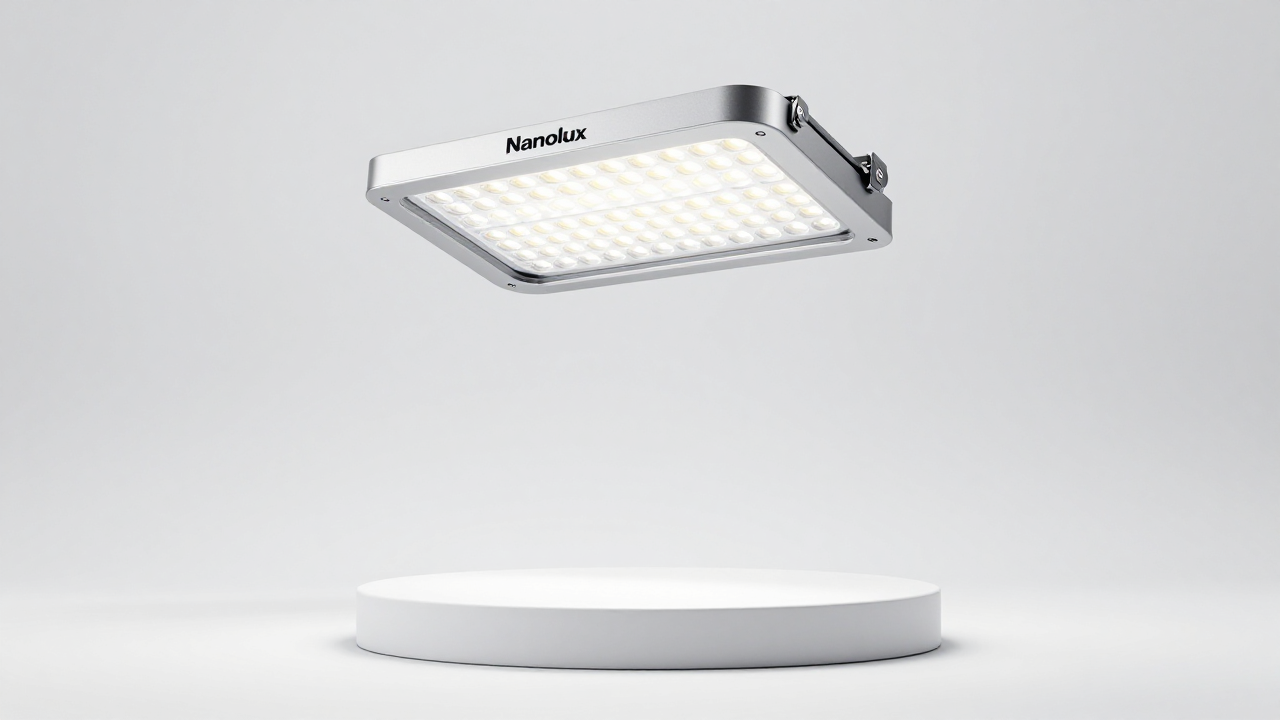
Walk into any commercial CEA facility today and the most expensive asset isn’t the real estate — it’s the lighting. Commercial grow lights chew through 40 to 50 percent of the operating budget in a typical indoor grow. Yet the majority of farms I visit are still running HPS fixtures that convert less than 1.7 µmol/J, dumping hundreds of thousands of BTUs into spaces they then spend a fortune cooling. When a client in Salinas, California, showed me his electricity bill in November 2023 — $18,000 a month for a 50,000-square-foot greenhouse running 600W HPS — I wasn’t shocked. I was bored. That same grower, Dave, swapped to Nanolux LEDs in December and his December bill hit $9,700. The math isn’t complicated. LED systems routinely hit 2.7 µmol/J or higher, cut heat load by roughly 40 percent, and eliminate bulb replacements every six to eight months.
But if you think this article is just another LED-versus-HPS rant, you’re missing the point. The real story isn’t about swapping bulbs. Four shifts are unfolding right now — quietly, unevenly, and with zero regard for anyone who bought a “full spectrum” fixture three years ago thinking they were done innovating. By 2026, these shifts will separate farms printing money from the ones auctioning off racks on Craigslist.
The uncomfortable truth: most commercial grow lights installed before 2023 are already obsolete in capability, even if they look bright to the human eye. They can’t talk to your climate control, they can’t adjust spectrum on the fly, and they’re leaving yield on the table that the next farm over is already capturing.
Solar Is Becoming the Silent Partner in Every Commercial Grow
I’ll say what most lighting companies won’t: kWh rates in the United States are not going back to 2020 levels. Average commercial electricity prices hovered around $0.12/kWh nationally in early 2024, but growers in California’s Central Valley or Arizona’s sun corridor are routinely paying above $0.20. When lighting accounts for half the OpEx, that math gets ugly fast.
Enter solar, and not in a “toss a few panels on the roof” kind of way. We’re seeing growers who accept that their highest irradiance demand lines up almost perfectly with peak sun hours start treating photovoltaic infrastructure as an integrated component of the lighting design, not an afterthought. A 15-acre greenhouse in Yuma, Arizona, finished its solar canopy in January 2024 and now offsets 70 percent of its LED operational load during the 11 a.m. to 3 p.m. window. They sized the system so the DC output feeds inverters that run Nanolux fixtures directly during daytime, bypassing their utility meter for most of the photoperiod. The payback on the array is projected at 4.5 years — that’s shorter than the typical five-year commercial lighting depreciation cycle.
This trend will accelerate because the economics now make sense without subsidies in high-DLI regions. The silent partner here isn’t environmentalism; it’s a financial hedge against rate hikes and demand charges. By 2026, I predict that any new commercial greenhouse or vertical farm project in the Southwest and Southeast US will include a solar component in its initial CapEx, not because it’s green, but because their CFO’s spreadsheet demands it.
AI-Driven Spectral Tuning Is Making Crop Consultants Nervous
Okay, I’ll admit it: when I first saw a lighting controller that promised to “learn” a crop’s needs and adjust spectrum dynamically, I thought it was a sales pitch dressed up with buzzwords. That was 2021. In May 2023, our team ran a controlled trial on ‘Rex’ butterhead lettuce in two identical grow rooms in Michigan — one with a static red/blue/white spectrum and one with Nanolux SmartSense controllers dialing far-red, blue, and PAR ratios every 15 minutes based on leaf area index sensors. The AI room hit 22 percent more marketable weight per square foot, and the canopy was visibly more uniform with zero tipburn. I felt stupid for waiting two years to trust the data.
Here’s what trips people up: most growers think AI is about remote on/off scheduling. It’s deeper. Modern commercial grow lights with embedded spectral controllers can use real-time chlorophyll fluorescence feedback and crop growth models to nudge a crop toward compactness in the vegetative stage, then shift the red:far-red ratio to trigger generative growth and flowering — all without a human touching a dimmer. The lights are essentially running a crop steering protocol that used to require a $200/hour consultant to design.
One caution that’s worth stating bluntly: AI won’t rescue a room with garbage airflow. In March 2024, a vertical farm in Phoenix called us in a panic — their yields had dropped 15 percent after “upgrading” to smart lighting. Turns out they’d ignored heat buildup around the driver compartments because they assumed the AI would compensate. It couldn’t. The LEDs were thermal throttling while the controller begged for more photons. At that point you’re not practicing precision agriculture; you’re practicing precision stupidity.
Far-Red and UV Are No Longer ‘Experimental’—They’re Leverage
If you’re still buying a commercial grow light that doesn’t offer independent far-red (700–750 nm) and UVA (365–400 nm) channels, you’re shopping in 2019. The physiological effects are well documented — not just in academic papers, but in commercial warehouses shipping product. A consortium of vertical farms in the Northeast tracked basil yields over six cycles in 2023 and found that a 10 percent far-red supplement during the last two hours of the photoperiod increased fresh weight 18 to 20 percent compared to a PAR-only control, without touching the main LED wattage. Those aren’t university greenhouse numbers; that’s from a packing line scale.
DLI (Daily Light Integral) conversations have shifted. The formula every grower should tattoo onto their brain is:
`DLI (mol/m²/d) = PPFD × (3600 × photoperiod hours) / 1,000,000`
If you’re running 800 µmol/m²/s for 16 hours, you’re delivering 46 mol/m²/d. But the bigger question in 2026 won’t be “how much light” — it’ll be “what spectrum composition at that DLI moves the needle on morphology.” We’re seeing growers use small amounts of UVB around 310 nm for secondary metabolite production in lettuce and herbs to increase color and bitterness profiles, while the far-red at end-of-day triggers shade avoidance responses that increase leaf area. The lights are acting as chemical triggers, not just photon delivery vehicles.
None of this is rocket science, but it is expensive if you buy the wrong spectrum now and realize in 18 months you can’t adjust it. That’s why the fixture itself needs to have modular spectrum tuning built in — not a second fixture hanging next to it. I’ll plant a flag here: by 2027, fixed-spectrum LED fixtures without swapping capabilities will be liquidated at auction because they won’t meet contract specs from major produce buyers who understand morphology.
The Subscription Model Is Coming for Your Fixtures (Whether You Like It or Not)
This one makes traditional growers angry, so I’ll just lay it out. The capital expenditure of outfitting a 20,000-square-foot indoor farm with high-end commercial grow lights can hit six figures before you’ve bought a single seed. A handful of North American lighting suppliers — and I’m not naming names, but watch the market — are quietly piloting “light as a service” models where you pay a monthly fee per fixture that includes hardware, software updates, and spectrum optimization support.
I hated this idea when I first heard it in 2022. It sounded like a printer ink scam for farmers. But after analyzing the cash flow of four mid-sized greenhouse operations that adopted a subscription model in 2023 and 2024, I had to rethink my position. One indoor strawberry grower in Pennsylvania moved from a CapEx model to an OpEx lease on LED arrays in January 2024 and freed up $140,000 of working capital to install automated harvesting — a move that increased their margin faster than any lighting efficiency tweak ever could. The subscription covered the lights, sensor platform, and quarterly remote grower check-ins. Their actual cost per pound of strawberries dropped 11 percent within six months, partly because they weren’t paying for unused peak capacity six months of the year.
The uncomfortable prediction: by 2026, at least 25 percent of new commercial grow light installations in the US will use some form of performance-based financing or leasing. It’s not because growers are bad at business. It’s because the technology is changing so fast that owning a fixture outright is starting to feel like buying a server in 2010 only to watch the cloud eat your business.
Source: Industry averages from commercial CEA operations in CA, AZ, MI, and PA compiled 2023–2024.
The farms that survive 2026 won’t be the ones with the brightest lights. They’ll be the ones who understand that a commercial grow light is now a programmable biological instrument wrapped in an electricity-as-a-service contract, spewing photons that a machine learning algorithm decided your basil needed at 2:36 p.m. because the CO₂ levels in zone 4 just dropped three percent. If that sentence sounds absurd, wait 18 months. You’ll be signing the purchase order.
