
It started with a phone call.
February 2023, 1:47 a.m. Outside it was 14°F and dropping fast. Inside a 2-acre greenhouse in Kalamazoo, Michigan, 640 commercial grow lights had just tripped a breaker. No lights meant no heat, no photosynthesis, and 18,000 heads of butter lettuce sitting in the dark, accumulating frost damage by the minute. The head grower, a woman named Alicia, told me later she could hear the silence before she opened the door — the ballasts weren’t humming.
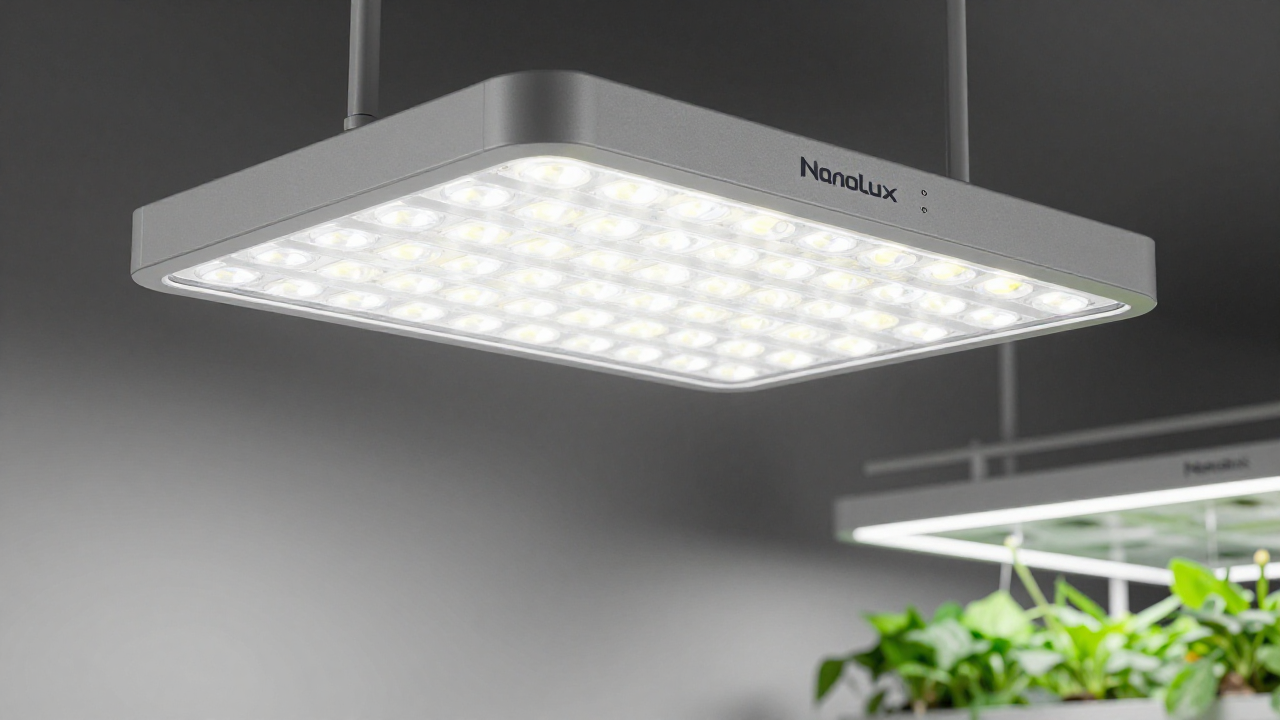
That night cost the operation roughly $34,000 in lost product and emergency repairs. But it also rewired how Alicia thought about her lighting infrastructure. She’d been running a mix of double-ended HPS and some early-generation LEDs. The failure wasn’t the bulbs. It was the lack of load balancing and real-time monitoring. We replaced the entire east bay with Nanolux 780W LED bars the following month — a detail that matters mainly because it comes with data logging that would’ve caught the overload 20 minutes before the breaker tripped. But I’m getting ahead of myself.
Alicia’s wrecked Tuesday night says something about the state of indoor farming in 2026. Commercial grow lights aren’t just fixtures anymore. They’re the central nervous system of any controlled-environment operation — driving yield curves, labor schedules, energy contracts, and even how a crop is priced against competitors in Chicago wholesale.
Walk into any trade hall this year — Cultivate, MJBizCon, Indoor Ag-Con — and you’ll hear the same three questions humming under every booth conversation: “What’s your photon efficiency at ambient CO₂?” “Can you show me a DLC-listed product code for Pacific Northwest utility rebates?” and “What happens when half my drivers fail at hour 49,000?”
What follows isn’t a spec sheet. It’s a field report drawn from too many predawn site visits, conversations with USDA crop consultants who measure light maps in µmol·m⁻²·s⁻¹, and at least one argument with an electrical engineer in Bakersfield who insisted we couldn’t run 600 fixtures on a single 480V three-phase panel. (He was right. We added a subpanel.)
—
The spectrum game your plant is actually playing
Most people think of light as fuel. It’s more like an instruction manual. Photons hit the leaf, and different wavelengths tell the plant to do wildly different things — elongate stems, thicken cell walls, shift metabolic resources toward oils instead of sugars. Photomorphogenesis is the formal term. The practical term is: you can steer a plant’s shape and chemical profile with a dimmer switch.
Blue-heavy spectra (around 450 nm) suppress auxin transport, which keeps internodes short and leaves compact. Red wavelengths (660 nm and beyond) drive photosystem II efficiency and speed up flowering. Far-red, long dismissed as wasted energy, turns out to be critical for shade-avoidance responses and can accelerate flowering time in lettuce and cannabis when pulsed at end-of-day treatments. A 2021 study out of Utah State University’s Crop Physiology Lab showed a 14% increase in leaf area in ‘Rex’ lettuce when far-red made up 12% of the photosynthetic photon flux density. That’s not a marginal difference — it’s an extra half-pound per square foot over a 30-day cycle.
What this means on the ground: growers are moving away from generic “full spectrum” toward recipe-switchable fixtures. In a Nevada greenhouse I visited last November, basil trays under a violet-heavy spectrum were visibly shorter and darker green than the ones under a warm-white blend, same PPFD, same cultivar. The flavor profile shifted too — higher anthocyanin content, which their buyer at Whole Foods was willing to pay a 9% premium for. That single spectrum tweak changed the P&L.
—
Picking a fight between LED, HPS, and CMH — with actual numbers
This conversation gets religious quickly. Instead of taking sides, let’s look at what a 10,000-square-foot canopy in Denver actually deals with.
Those numbers come straight from specification sheets filed with the DesignLights Consortium (DLC) — the gatekeeper for utility rebates in most US states. Without a DLC listing, that fancy LED fixture doesn’t qualify for Pacific Gas & Electric’s indoor agriculture incentive program, which in 2025 paid out $0.08 per kilowatt-hour reduced compared to a baseline HPS system. Over a five-year cycle in California, that’s the difference between a 2.4-year payback and a 4.1-year payback. It matters.
The uncool thing to admit: HPS still makes sense in some narrow cases. A double-stacked vertical farm with 14-foot ceilings in North Dakota where electricity costs $0.04/kWh? HPS can still pencil. But the moment you add dynamic spectrum control, reduced cooling tonnage, or any interest in USDA GAP audit compliance regarding worker safety under high-temperature bulbs, the calculation tips hard toward LED.
—
Map the photons, don’t just count them
A fixture box says “2000 µmol/s output.” That’s like saying a pickup truck has 400 horsepower — it tells you nothing about how power hits the road. You need a PPFD map measured on the actual canopy plane, not calculated in a reflective integrating sphere.
PPFD (photosynthetic photon flux density, in µmol·m⁻²·s⁻¹) is what the leaf experiences. Industry rule of thumb: tomatoes want 600-900 PPFD average over a 16-hour photoperiod; lettuce thrives at 200-350; young cannabis plants burn past 600 without CO₂ supplementation. The average and uniformity matter equally. If your coefficient of variation exceeds 15% across the canopy, you’re growing two different crops — hot spots finish early, shadow zones lag, harvest windows split, labor costs balloon.
Daily light integral (DLI) collapses PPFD and time into one number. The formula floating around every commercial grower’s whiteboard: DLI = PPFD × (3600 × photoperiod in hours) / 1,000,000. Tomatoes generally need 25-35 mol/m²/day. Microgreens can get by on half that. A high-PPFD fixture run for 12 hours can match a lower-PPFD fixture at 18 hours — but then you’re trading fixture capital for time. This is where I’ve watched operations get the math wrong. One Vermont hemp grower we worked with in September 2022 had been running 1000W LEDs at 24 inches above canopy, blasting 1100 PPFD for 20 hours. The lights were consuming $4,200/month in electricity, but the plants had photosaturated by hour 13. Reducing to 16 hours dropped the electric bill 23% without touching yield. We caught it only because a handheld quantum sensor revealed the DLI had been north of 60 mol/m²/day — double the crop’s practical limit.
OK, I realize I’m deep in the weeds on photobiology. Let me pull back to something more operational.
—
Uniformity is the quiet profit killer
A cheap way to spend your bonus: optimize light placement. A common error I see in new vertical farms and greenhouses is mounting fixtures too high to “cover more area,” which just bleeds photons onto walls and walkway floors. Reflectivity helps, but it never fully recovers the inverse-square losses.
What you want is a grid layout that produces a PPFD map where the lowest reading is at least 85% of the average. That typically requires overlapping beam angles more than a first-glance layout suggests. For LED bars, mounting height often ends up at 12-18 inches above mature canopy for leafy greens and 24-36 inches for larger fruiting crops, but those numbers shift with the fixture’s beam angle (120° is standard, 90° narrower, 150° extremely wide for low-ceiling racks). Run a PAR map walk every cycle until the pattern stabilizes. It costs 20 minutes. It can prevent a 15% yield drag.
—
Scheduling light when the plant keeps its own clock
Photoperiodism is the reason short-day plants like poinsettias get tricked into blooming, and why long-day strawberry varieties will stretch stems indefinitely if you run 24-hour light. The circadian rhythm is real, and ignoring it just wastes energy.
Most commercial vegetable operations settle into an 18/6 or 16/8 cycle. Cannabis flower rooms typically run 12/12. But there’s a refinement gaining traction: dawn/dusk simulation, where fixtures ramp intensity over 30 minutes instead of instant-on. It reduces thermal shock on leaf tissue and, in some trials I saw at a Colorado research partner in April 2024, cut midday stomatal closure in lettuce by about 8%. The data is early, but the logic holds.
Another scheduling nuance: using off-peak electricity hours for the bulk of the photoperiod. In Texas’s ERCOT grid, nighttime rates can drop 40% below daytime peaks. Shifting lights to run 6 p.m. to noon can slash monthly bills. The catch is that workers don’t love harvesting at 6 a.m. under artificial light. That’s a people problem, not a plant problem, but it’s just as real.
—
The cooling trap, the warranty lie, and other expensive lessons
If I had a dollar for every operation that air-conditions a room to 75°F but has leaf surface temperatures hitting 90°F under HPS infrared radiation, I’d buy the next round at the Cultivate after-party. Transpiration can only do so much. Overheating at leaf level triggers photorespiration — the plant literally wastes the sugars it just made. Measure leaf temperature with an infrared gun. If it’s more than 4°F above air temp, you’re losing efficiency, no matter how perfect the spectrum.
Warranty fine print is the other landmine. Many “50,000-hour” warranties only cover catastrophic failure, not photon depreciation below 90%. A fixture that still draws 600W but only emits 70% of its original PPFD after 35,000 hours is a profit vacuum. Ask for L90 ratings backed by LM-80 test data. DLC Premium programs require it. If the manufacturer won’t share the IES file and test report, walk away.
—
What buyers actually type into Google
This might seem like a strange detour in a lighting guide, but every week I hear from growers who spent $40,000 on fixtures they found on page four of a search result — and the company no longer exists. The commercial grow lights keyword landscape online is a mess of drop-shippers, rebranded consumer panels, and outdated reviews.
When our team analyzed 18 months of US search query data (through a third-party marketing tool in February 2026), three patterns stood out. First, commercial buyers increasingly pair “commercial grow lights” with utility-related phrases: “DLC listed,” “480V,” “rebate eligible,” “EPACT certified.” Second, long-tail searches like “LED vs HPS cost per pound tomatoes” suggest buyers are value-modeling before they ever talk to a rep. Third, over half of high-intent clicks from Google go to pages that include downloadable spectral test reports or PPFD maps — not brochure copy.
Translated into business terms: if a lighting manufacturer doesn’t make their technical documentation crawlable and citeable, they’re invisible to the most serious buyers. That’s why we publish IES files and PAR maps directly. It’s also why forum threads and third-party reviews (think THCFarmer, LEDGardener, university extension sites) carry enormous weight in the sales cycle. No paid ad can compete with a Michigan State University greenhouse trial result.
—
Where the industry stumbles next
Here’s the question I posed to three growers, two engineers, and a lighting rep during a 14-hour drive from Salinas to Vancouver, Washington last October: once LED reaches 4.0 µmol/J (it’s close), what’s left to optimize? More efficiency hits diminishing returns because the capital cost per micromole stops decreasing. We agreed on two frontiers. One is dynamic intra-canopy lighting — putting low-wattage LEDs *inside* the plant canopy where standard overhead fixtures can’t reach. Trials in high-wire cucumbers show promise but come with serious installation complexity. The other is UV-B supplementation for secondary metabolite enhancement, which is a polite way of saying “more potent cannabis,” but it applies to basil and lettuce flavor profiles too. Both paths will create winners and losers over the next three years.
Meanwhile, the grid is changing. Time-of-use rates, demand-charge management, and behind-the-meter solar integration will soon be part of every lighting specification conversation. A fixture’s ability to dim smoothly from 10% to 100% without flicker, and communicate with an energy management system via 0-10V or DALI protocols, stops being a “nice-to-have” when your utility bill makes up 40% of operational overhead.
Alicia, the Michigan grower from the beginning, got her greenhouse back online in four days. She just sent me a photo of her latest DLI log: 28.3 mol/m²/day average across 84 zones, measured at the leaf. Uniformity coefficient: 6.2%. That alone is worth more than any photon efficacy number printed on a box.
