
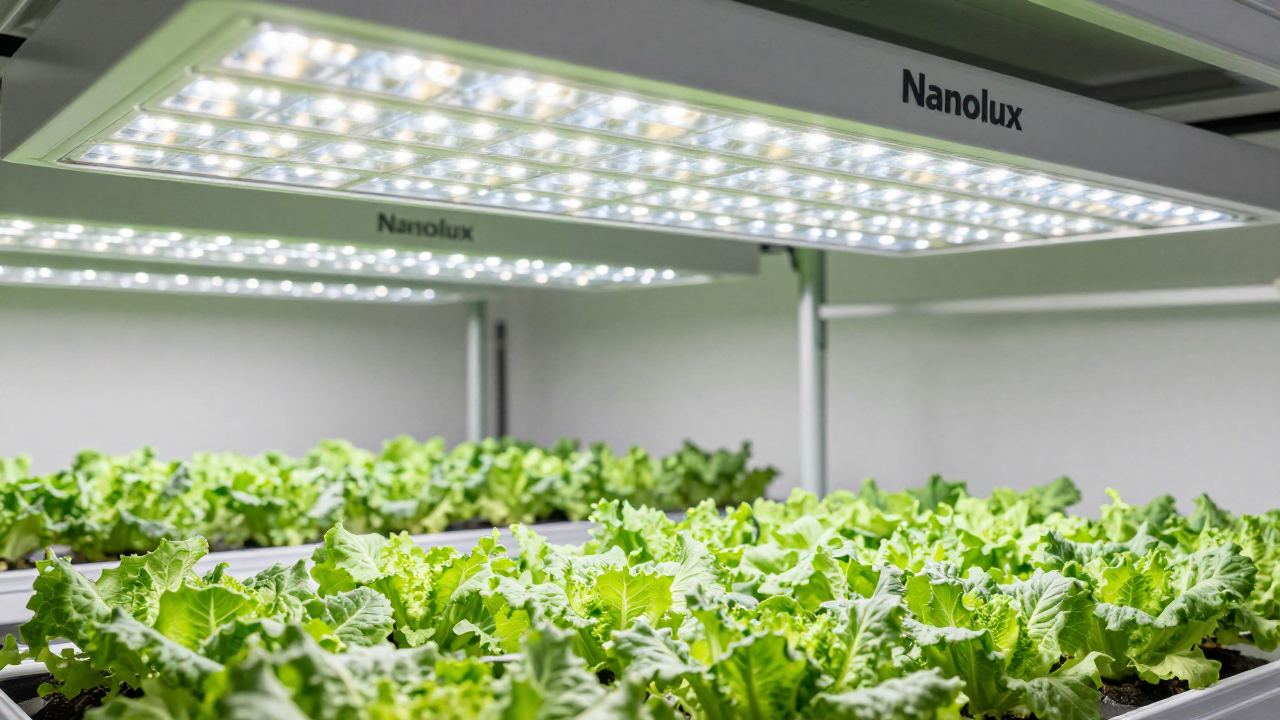
Why is 2026 the year commercial grow lights stop being optional and start being your biggest margin lever?
If you’ve been on the fence about upgrading, pull up a chair. By 2026, two things collide: average U.S. electricity rates for commercial operations have climbed almost 23% since 2020, and crop prices — whether leafy greens in vertical farms or cannabis flower in controlled environments — are keeping margins razor-thin. A 2023 snapshot from the USDA’s ERS shows that energy can eat 30% to 40% of an indoor facility’s operating cost. That line item isn’t getting smaller.
Now flip the lens. A well-designed commercial grow light system doesn’t just replace sunshine; it turns an uncontrollable variable into a precision dial. In a 2021 trial at a Colorado greenhouse, operators swapped out single-ended HPS for spectrum-tunable LED bars and recorded a 12% increase in dry flower weight per square foot over two identical harvest cycles. Same genetics, same nutrient schedule — only the light recipe changed. That’s not magic. That’s tightening the biology: when you deliver the exact PAR spectrum a crop needs at each growth stage, photosynthetic efficiency stops being a textbook term and shows up on the scale.
The takeaway for 2026 isn’t “should I buy LEDs?” — it’s “will my competitors be running lights that pay for themselves twice over while I’m still budgeting for bulb replacements?” If your P&L doesn’t have a line for a commercial grow light upgrade, you’re budgeting for someone else’s market share.
LED, HPS, or CMH — how do I cut through the brochure gloss and buy what actually works?
I’ve stood in too many trade show booths where a sales rep waves a PAR map and says “our light is the best.” The honest answer: the best light is the one that matches your crop’s daily light integral (DLI) requirement, your ceiling height, and your cooling capacity. Nothing else matters at 2:00 a.m. when the compressor kicks in.
Here’s the cheat sheet we share with commercial clients before they sign a P.O.:
That efficacy column — micromoles of PAR light per joule of electricity — is where LEDs separate themselves. In a 50,000-square-foot greenhouse near Lansing, Michigan, the head grower replaced 1,000-watt DE HPS with 645-watt tunable LEDs in early 2023. The light output stayed at 1,200 µmol/m²/s at the canopy, but the energy draw dropped 35%. The local utility’s DLC rebate program knocked another 18% off the upfront cost. You don’t need a spreadsheet to see how that math works out over a three-year lease.
CMH and HPS aren’t obsolete — we still see them succeeding in facilities where the HVAC was designed around high heat loads and the capital budget can’t absorb a full LED retrofit. But for any new build or major renovation in 2026, starting with HPS today is like putting a carburetor in a Tesla.
What does getting light placement wrong actually cost you — in real dollars?
It costs more than most facility managers admit. A client in Southern Oregon called us in March 2022 to troubleshoot a flower room that was producing dense, frosty colas in the center tables and larfy, underdeveloped buds on the outer edges. Their PPFD map — when we finally measured it at 36 points across the canopy — showed a uniformity score of just 58%. The center was hitting 1,100 µmol/m²/s; the edges hovered around 400. The room had 80 lights, all hung at exactly the same height, spaced evenly on a grid. Looked perfect on the CAD drawing. Under the PAR meter, it was a disaster.
Light uniformity isn’t about symmetry; it’s about overlapping beam angles and compensating for wall reflection losses. A good rule of thumb for commercial grow lights: aim for a uniformity coefficient above 80%, measured as minimum PPFD divided by average PPFD across the whole canopy. Below that, you’re paying to power photons that never hit a leaf, or over-saturating hotspots while starving the perimeter.
What did that cost? In that Oregon room, we redesigned the layout — staggered some fixtures, added narrow-angle reflectors on the perimeter, and dropped a few center lights 6 inches. Uniformity jumped to 87% within a week. The next harvest packed an extra 4.2 pounds of marketable flower from the same footprint. At $800 a pound wholesale, that’s a $3,360 bump every cycle from a handful of bracket adjustments. Not bad for an afternoon’s work.
The lesson: if you haven’t paid a tech to run a full PAR map on every room in your facility, do it before you buy another fixture. You’re probably leaving money on the table.
How do I schedule photoperiods to hit my DLI target without bleeding cash?
We need to talk about DLI, because it’s the one number that ties together light intensity and time. The formula is straightforward — DLI = PPFD × (3600 × photoperiod hours) / 1,000,000 — but getting the schedule right is where the money lives.
In the U.S., most vegetable crops want a DLI between 15 and 30 mol/m²/d, depending on the stage. Cannabis in flower often targets 35 to 45 mol/m²/d. If you’re running a fixed-output fixture, you only have one lever: hours of operation. But that lever gets expensive fast. A 1,000 µmol/m²/s fixture running 18 hours a day delivers a DLI of 64.8 — way beyond what any crop can use, and you’re paying for the wasted photons.
This is where controllers earn their keep. In a controlled trial at a Sacramento vertical farm in early 2024, the team used a sensor-driven controller to dynamically adjust LED output based on real-time ambient light from the greenhouse glazing. During sunny hours, the supplemental LEDs dimmed to 40%; on cloudy afternoons, they ramped back to 100%. Over a full spring cycle, DLI at the canopy stayed within 3% of the target, while total energy consumption dropped 28% compared to a static 18-hour schedule. The controller paid for itself in two cycles.
If you don’t have a controller, at least do the math monthly. Measure your canopy PPFD with a calibrated quantum sensor — not your phone, not a lux meter — and run the formula. Don’t rely on the fixture manufacturer’s published PAR map; those are measured in a sphere with no canopy reflection. Your actual numbers will be lower. Then adjust the timer. Every hour you cut beyond what the crop needs goes straight to your bottom line.
What mistake do even 10-year growers keep making when they scale up?
Scaling a facility means you’re suddenly managing building physics, not just botany. The mistake I see repeat every year: growers treat their new 20,000-square-foot room like a bigger version of their 2,000-square-foot pilot. They’ll spec the same fixture density, the same photoperiod, and the same HVAC design — then wonder why the leaf surface temperature climbs 5 °F in the center rows and transpiration spikes.
Heat stacking is real. In a big room with hundreds of LEDs, even efficient fixtures generate a cumulative thermal load that warm air can’t shed fast enough. I remember a conversation in December 2020 with a facility manager in Phoenix who had just doubled his flowering canopy. He ran the same tunable LED model he’d used successfully in the smaller room, but within six weeks, colas directly under the fixtures showed micro-tip bleaching. That’s not a nutrient issue; that’s a photon overdose combined with insufficient air movement at the boundary layer. He needed to increase the fixture-to-canopy distance by 10 inches and add supplemental horizontal airflow fans across the center rows. Problem solved.
Before you scale, measure the VPD (vapor pressure deficit) and leaf surface temperature across your test room at full canopy closure. Then give your mechanical engineer those numbers, not the fixture datasheet’s ambient rating. And if you’re mixing natural gas CO2 burners with sealed LED rooms, pay attention to the humidity dump — it can spike RH 15% overnight and invite botrytis. Scale-up is where lighting and environmental controls stop being separate purchases and become one integrated system.
I just dropped serious capital on new fixtures. How do I prove the ROI to my CFO or investor?
CFOs don’t care about PAR maps. They care about three numbers: yield per square foot per year, cost per pound (or per case), and payback period. So your job after the install is to track those three with embarrassing detail.
Put power meters on every lighting circuit, not just the main panel. In a Denver-headquartered indoor farm, we helped set up sub-metering on 12 zones in early 2023. Within two cycles, the data showed that the south-facing zone needed 22% less supplemental light from March to September than the north zone, thanks to passive solar gain. The head grower adjusted the fixtures seasonally and saved $4,800 in electricity over six months — in one zone. That’s the kind of granularity that makes a board meeting go differently.
If your business sells to retailers, cite the consistency data, not just the total weight. One commercial greenhouse in Ohio started packaging their lettuce with a sticker showing a “grown under precise spectrum” note after switching to tunable LEDs. Wholesale customers reported 15% fewer spoilage claims because the heads were consistently sized. That’s an indirect ROI that a P&L statement loves.
For payback period, be honest about the variables. LED retrofits in existing facilities with outdated electrical infrastructure can take 3 to 5 years if you’re replacing transformers and panel boards. Greenfield builds, where LED and HVAC are sized together from day one, often hit payback in 18 to 24 months. If your CFO hears a blanket “two-year payback,” you’ll lose credibility. Give them a range, tied to your actual utility rate and crop cycle, not a vendor’s white paper.
One last note: if your lighting upgrade qualifies for a DLC rebate — and most high-efficacy commercial grow lights do — don’t leave that money unclaimed. Utilities in states like California, Massachusetts, and Colorado have programs that can cover 20% to 40% of fixture costs. We’ve seen clients overlook this because their electrician didn’t mention it. File the paperwork before the install; some rebates require pre-approval.
The simplest ROI narrative? “We cut our cost per pound by 18% and improved batch uniformity to the point where our buyer stopped calling to complain.” That’s the conversation that funds your next expansion.
