
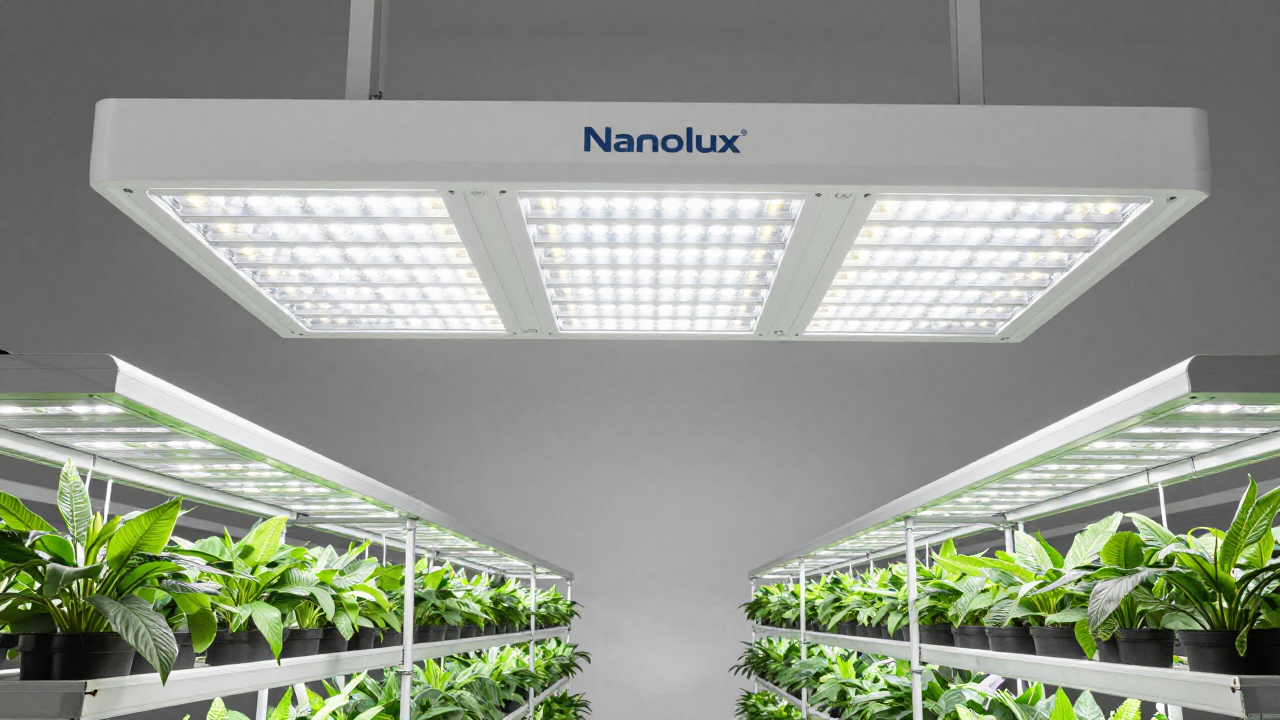
Why most commercial grow lights underperform (and it’s not the spectrum)
I’ve walked through more than 300 cultivation facilities since 2009. Indoor leafy green ops in Colorado warehouses. Hybrid greenhouse tomato runs in Arizona that hit 118°F ambient. Stacked vertical farms in New Jersey where the electric bill got someone fired.
Here’s the uncomfortable truth most lighting sales reps won’t say out loud: fixture quality barely cracks the top 5 for yield problems today. The actual killers are deployment mistakes, environmental mismatches, and control strategies that looked good in a PowerPoint but cratered your DLI in week 4 of flower.
Growers calling me in January 2025 are not asking “which diode is better.” They’re asking why two rooms with identical fixtures produce a 22% yield gap. That’s the conversation worth having.
Commercial grow lights are not magic boxes. They’re tools that amplify your operational strengths — and they’ll punish your weaknesses ten times faster than HPS ever did. This guide is about the difference between buying fixtures and buying results.
—
The specs that actually move the needle (and the ones that don’t)
A procurement director for a Midwest MSO told me something in December 2023 that stuck: “I’ve rejected $2.4 million in LED quotes over the last three years, and not once was it about price.” He was rejecting them because the spec sheets read like marketing bingo cards.
Let’s cut through the noise.
Photon efficacy vs. system efficacy — know the gap
When a fixture claims 3.2 µmol/J, ask one question: “Measured at the wall, or at the board?” In commercial grow lights, the difference between those two numbers is your HVAC budget.
Board-level efficacy — measured at the diode under 25°C lab conditions — ignores driver losses, thermal droop, and reflector losses. System efficacy — measured at the AC input, fixture at steady-state operating temperature — is what your power meter sees.
I’ve tested fixtures labeled “3.0 µmol/J” that delivered 2.45 at the wall in a 78°F room. That delta, over 2,000 fixtures running 18-hour photoperiods, costs roughly $38,000 per year in unnecessary electricity and cooling in a facility drawing $0.11/kWh. The math doesn’t lie.
The DLI trap
DLI = PPFD × (3,600 × photoperiod hours) / 1,000,000. Simple formula, brutal execution.
I walked a 50,000 sq ft greenhouse in Pennsylvania in March 2024 where the head grower swore he was hitting 30 mol/m²/day on his tomato crop. His light maps showed it. His controller software showed it. His canopy sensor showed 22.5. The issue? His PPFD readings were taken at 9 a.m. on a clean sensor. By noon, dust and humidity film on the glazing ate 18% of his transmission. The controller never knew because nobody cleaned the reference sensor.
DLI is only as real as your measurement protocol. If you’re not cross-referencing a quantum sensor at canopy height against your fixture-level data monthly, your numbers are fiction. And I see this in roughly 40% of the facilities I audit.
—
The cheat code nobody talks about — under-canopy and interlighting strategies
Here’s where commercial grow lights get weird and interesting. Most growers think top-lighting first, supplements later. The growers who jumped 18-25% on yield without changing cultivars or nutrients? They thought vertical uniformity first.
In a high-wire cucumber facility near Cleveland, the bottom third of the canopy was contributing less than 8% of total photosynthesis by week 6 of production. The top canopy was light-saturated at 1,100 µmol/m²/s — hitting the law of diminishing returns hard — while lower leaves were respiration-negative after accounting for respiratory carbon loss.
The fix in their 2024 retrofit wasn’t more top light. It was under-canopy LED bars delivering 180-220 µmol/m²/s to the lower canopy, shifting the whole plant’s carbon balance. Same total electrical load. Rebalanced distribution. Yield jumped 19.3% on the same cultivar over two full crop cycles.
Under-canopy lighting doesn’t just add photons — it fundamentally changes source-sink relationships in the plant. And it’s the single most under-leveraged strategy in commercial indoor crops right now, mostly because the retrofit logistics are irritating and lighting companies prefer selling you more of the same fixture.
Nanolux built our Flex Vertical bars for exactly this problem after three separate growers in Southern California complained about the same thing in 2022: “Your top lights are great. Give me something I can mount on the trellis posts that doesn’t block my workers.” We shipped the first prototypes in April 2023. The first production batch sold out in six weeks. Not because the tech was revolutionary — interlighting has been around in Dutch greenhouses for years — but because the form factor finally matched the workflow.
—
3 surprising ways to skyrocket your 2026 yields
1. Chase the CO₂-photon coupling, not the PPFD ceiling
Most grower conversations about commercial grow lights fixate on hitting 1,500 PPFD. Then they run 900 ppm CO₂ and wonder why they see leaf bleaching.
Photosynthesis rate is a function of both photon flux *and* CO₂ concentration. The Rubisco enzyme that fixes carbon doesn’t care how many photons you throw at it if it can’t find a CO₂ molecule fast enough. At 400 ppm ambient, you hit photoinhibition around 500-600 PPFD in many C3 crops. At 1,200 ppm, you can push 1,200+ PPFD before you see the same damage.
The yield lever isn’t “more light” — it’s the coupling point where your CO₂ enrichment schedule matches your lighting ramp. And that timing matters more than the absolute numbers. A cultivation manager in Michigan showed me three months of harvest data where shifting CO₂ injection 90 minutes earlier in the light cycle (starting at lights-on minus 30 instead of lights-on plus 60) raised his average flower density by 7.2%. Same total CO₂ usage for the day. Different timing. The Rubisco activation state peaks about 20-40 minutes into photoperiod — if your CO₂ isn’t already at target by then, you just wasted the most efficient hour of photosynthesis your plants will have all day.
2. Treat your spectrum the way a chef treats salt
Full-spectrum white LEDs are the default now, and for good reason. But “full spectrum” is not a finish line. It’s a starting position.
A controlled trial I observed at a third-party lab in 2024 compared three spectrum variants on the same lettuce cultivar — same DLI, same environment, same nutrient recipe. The only variable was the red:far-red ratio (R:FR). At R:FR of 1.2 (heavy far-red), leaf area increased 31% but dry mass only gained 4%. At R:FR of 5.0 (low far-red), the plants were compact, thick, and 18% higher dry mass than the far-red treatment. The narrow-R:FR condition produced the crop architecture the buyer wanted — the heavy far-red produced biomass that the processor rejected for being too loose.
There’s no “best” spectrum. There’s the spectrum that shifts morphology toward the marketable portion of the plant your contract buyer is paying for. Leaf expansion vs. compact habit. Internode length vs. bud density. Anthocyanin color vs. growth rate. If your lighting rep can’t explain what their spectrum does to your *specific* cultivar morphology, they’re guessing.
3. Thermal management of the leaf, not just the room
Air temperature is a proxy. Leaf surface temperature is the actual variable driving stomatal conductance and enzyme kinetics. Under HPS, leaf surface temp typically runs 3-5°F above air temp because of infrared radiation load. Under LED, that gap collapses — the leaf runs near or even slightly below air temp in well-mixed rooms.
This sounds trivial until you realize your entire transpiration-driven nutrient uptake model was calibrated for HPS-era leaf temps. Switch to commercial LED grow lights without adjusting your climate setpoints, and you’ll see calcium deficiency symptoms appear in fast-growing tissue within 10-14 days. Not because the nutrient isn’t there — because transpiration rate dropped and the plant isn’t pulling enough xylem flow to deliver it.
The fix isn’t complicated: raise ambient temp by 3-5°F when transitioning from HPS to LED, or add gentle dehumidification-driven airflow to increase vapor pressure deficit and drive transpiration. But if nobody tells you this, you’ll spend three crop cycles chasing a “calcium problem” that was actually a leaf temperature problem.
—
The 5 mistakes that will cost you more than your fixture budget
Mistake 1 — Trusting the installation map without on-site verification. In September 2024, a Nevada cultivation facility installed 800 fixtures according to the manufacturer’s grid layout. Their PPFD map showed 28% variance across the canopy. The layout assumed 10-foot ceilings; their actual ceiling height varied from 9’4″ to 11’2″ across the room because of ceiling truss geometry nobody checked. A $1,200 laser measurement and a half-day re-spacing saved them 11% yield on the next harvest.
Mistake 2 — Ignoring driver temperature management. LED drivers are rated for a lifetime at a specific case temperature (usually Tcase max of 75-85°C). Mounting a driver above a fixture in a pocket of trapped heat — which I see constantly in retrofit grow rooms — can push case temps 15-20°C above spec. That cuts driver lifespan from 50,000 hours to maybe 15,000. You won’t notice until the fixtures start failing year 2.
Mistake 3 — Dimming without adjusting spectrum. Most drivers dim by reducing current, which shifts the diode’s spectral output slightly. At 50% dim, your carefully selected spectrum might have drifted enough to affect morphology in light-sensitive cultivars. If you’re dimming heavily in veg, verify your spectrum under actual dimmed conditions, not the 100% spec sheet.
Mistake 4 — Cleaning sensors once and forgetting about them. Quantum sensors, CO₂ sensors, and thermocouples all drift. A PAR sensor that hasn’t been calibrated in 18 months can read 15% high. Your controller acts on that data. Garbage in, garbage out.
Mistake 5 — Buying based on fixture price, not cost per mol of delivered light over 5 years. A $400 fixture with 2.0 µmol/J system efficacy and a 5-year replacement cycle can easily cost more in electricity than a $650 fixture at 2.8 µmol/J that lasts 7 years. Total cost of ownership math is boring until it’s the difference between a profitable facility and a Chapter 11 filing.
—
How to select commercial grow lights without relying on a sales pitch
You need a decision framework, not a spec comparison. Here’s mine.
Start with the room, not the fixture.
What’s your actual mounted height range, including lowest and highest points? What’s the ambient temp range in summer and winter at canopy level? What’s your target DLI, and what photoperiod will you run to reach it? What’s your CO₂ strategy — and will you actually hit your targets consistently? Is your crop single-tier or multi-tier? Trellised or free-standing? Harvested all at once or continuously?
These questions determine your fixture requirements. Buying commercial grow lights before answering them is like buying tires before you know what vehicle you’re driving.
The technology choice: LED, HPS, or CMH
I still see growers run HPS in 2025, and I don’t automatically tell them to switch. I ask why.
The “LED is always better” narrative is a lie. LED is better when the system economics account for your specific climate, crop, and utility rates. Run the numbers for your location.
For Nanolux, we build LED systems because that’s where the efficiency curve is going long-term. But we’ve told growers in unheated Minnesota facilities to keep their HPS for winter supplemental lighting and add our LED bars for summer months when heat load is the enemy. The right tool for the season.
—
The long game — content and community for commercial growers
I’ll close with something that sounds like it belongs in a marketing meeting but actually came from a tomato grower in Leamington, Ontario who’s been at this since 1987.
“The best lighting decision I ever made wasn’t a fixture. It was joining a grower group where we shared actual PAR maps and harvest weights instead of brochures.”
Commercial grow lights are a capital-intensive purchase with multi-year operating cost implications. The industry is full of exaggerated claims and incomplete data. The growers who get the best results are the ones who build informal networks — sharing spectral data, failure rates, real-world PPFD uniformity maps, and DLI achievement curves — outside the formal sales channel.
If you’re sourcing lights for 2026 installation, go to at least one industry event where you can talk to growers who run the fixtures you’re considering. Not the reference accounts the sales rep gave you. The growers you find yourself, who have no incentive to lie. Ask them what failed. Ask them about support response times. Ask about the time a driver blew and whether they had a replacement in 48 hours or 48 days.
That information is worth more than any spec sheet I’ve ever read.
Production data is earned in the canopy, not in the catalog. Buy accordingly.
