
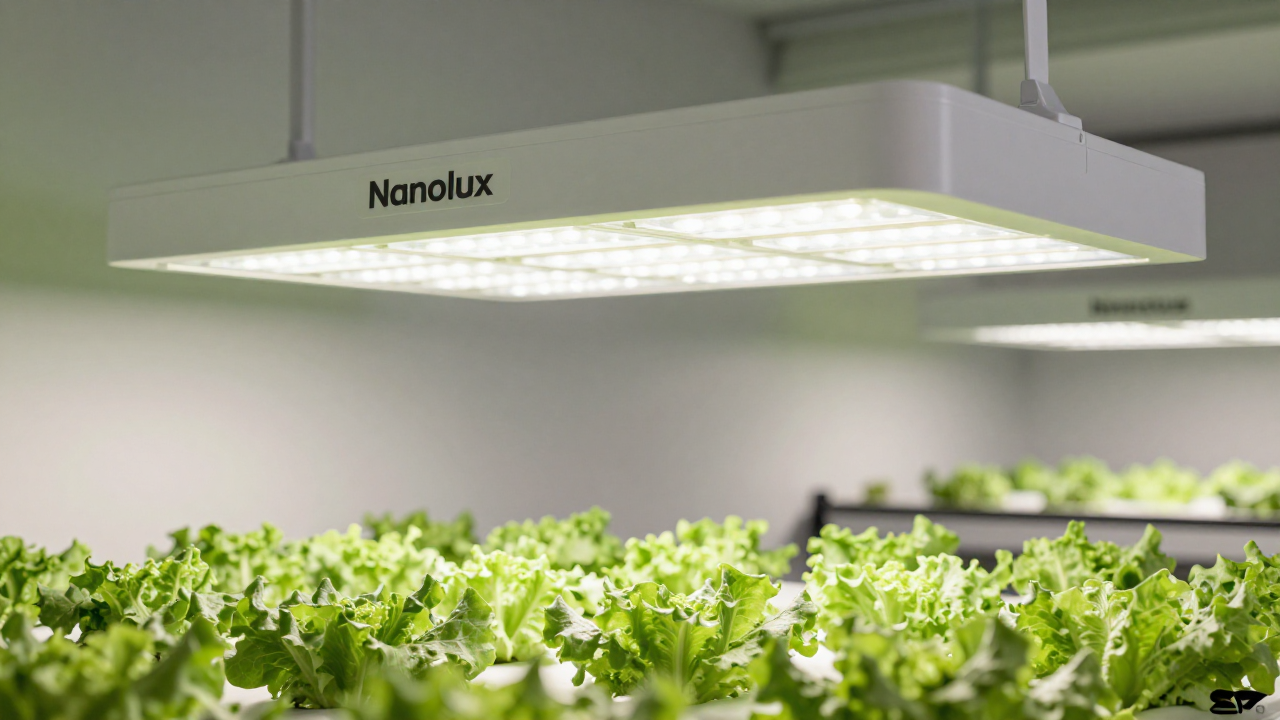
The Tipping Point When Sunlight Stops Being Enough
Rick Holbrook stared at the tablet, certain the sensor was fried. February 17, 2026 — a gray, 14-degree morning in Holland, Michigan — and his greenhouse management app showed a harvest line that didn’t belong on his farm. Beefsteak tomato rows in Bay 4 had just punched out 28.4 pounds per vine, against a five-year February average of 13.8. He walked the row twice, counted fruit clusters, and called his operations manager. The sensor was fine. The only thing that changed between the 2025 winter season and now was the light.
His 20,000-square-foot facility had spent seven years under double-ended HPS. In October 2025, Holbrook ripped every one of them out and installed tunable-spectrum commercial grow lights — a retrofit that, on paper, was supposed to improve canopy uniformity and cut energy costs by something in the neighborhood of 35%. Nobody projected a yield doubling. Nobody except the plants.
I’ve been deep in horticultural lighting since 2004, when Nanolux first started wiring up early LED prototypes in a warehouse outside Sacramento. I’ve seen lights that promised the moon and delivered a utility bill. Holbrook’s result isn’t a fluke, but it’s not automatic either. It’s what happens when the right photon strategy collides with a grower who tracks every variable like a hawk.
What a Photon Actually Tells a Plant
Horticulture runs on a deceptively simple currency: photosynthetic photon flux density, or PPFD, measured in µmol/m²/s. A leaf doesn’t care about lumens. It cares about how many photons in the photosynthetically active radiation band — 400 to 700 nanometers — land on its surface every second. But the spectrum within that band triggers entirely different hormonal responses. Deep red around 660 nm drives stem elongation and flowering speed. Far red near 730 nm, the “shade avoidance” signal, can cut days off a lettuce crop or bulk up tomato internodes when dosed correctly. Blue at 450 nm keeps basil compact and anthocyanin-rich.
Industry benchmarks now put top-tier LED commercial grow lights at 3.2 to 3.8 µmol/J of wall-plug efficacy. A double-ended HPS bulb, even with a new digital ballast, might scrape 1.9 µmol/J. That gap means a Michigan greenhouse switching from 1,000-watt HPS to 800-watt LED can maintain the same PPFD on the canopy while pulling 170 fewer watts per fixture — and generate far less radiant heat, which messes with VPD management in a sealed greenhouse.
Holbrook’s previous HPS array was dropping 900 µmol/m²/s on the upper canopy but cratered to 280 µmol/m²/s two feet below. A tomato plant is a tall, greedy creature. Bottom leaves that see only dim light become respiration sinks, not sugar factories. His new layout, using broad-spectrum white LEDs with supplemental red bars and under-canopy strips, pulled the lower canopy to 470 µmol/m²/s. That’s not a marginal tweak — it rewires the entire carbon budget of a plant.
The LED Reckoning: HPS Is Losing Its Grip
Walk into any greenhouse lighting retrofit meeting in Leamington, Ontario, or Central Valley, California, and the argument floor looks roughly like this now:
The HPS numbers haven’t moved in half a decade. The LED numbers keep inching up because driver efficiency and chip packaging have crossed a threshold where every extra percentage point matters — especially when a 100-acre greenhouse pays a $400,000 annual electric bill.
The U.S. Department of Energy’s latest building codes have started to tip the scale further. Several states, including Colorado and Michigan, now require DLC Horticultural listing for fixtures in any new federally funded CEA project. That certification mandates not just efficacy minimums but also third-party-verified lifetime testing. So the days of buying a no-name aluminum box off a shipping container and hoping for the best are closing fast.
Picking a Fixture for the Real World, Not the Catalog
I learned one lesson the hard way around 2017 — putting an IP65-rated fixture in a condensation-heavy hydroponic lettuce house isn’t optional, it’s a survival tactic. We saw salt creep inside connectors that were rated IP44, and entire rows would drop at 3 a.m. A greenhouse isn’t a warehouse with a drop ceiling. It’s a corrosive, wet, high-CO₂ box.
When sizing a system, growers need to calculate the daily light integral first. DLI = PPFD × (3600 × photoperiod hours) / 1,000,000. Tomatoes on a long-day schedule might need a DLI of 22–30 mol/m²/day. A fixture that delivers 800 µmol/m²/s on the canopy for 18 hours gives you a DLI of 51.8 — far more than needed — but you don’t run it at 100% all day. You dim it, which raises efficacy and lowers heat. That’s the part HPS can’t do without a massive output penalty.
Local electricity rates shape ROI just as heavily as fixture price. In Holland, Michigan, Rick Holbrook’s utility charges about $0.09/kWh. His annual lighting energy bill dropped from $87,000 to $52,000. In parts of California, where PG&E can exceed $0.30/kWh, the payback period on an LED retrofit shrinks to 14 months. National averages calculated by growers’ associations show a three-year capex recovery on LED commercial grow lights for most vegetable greenhouses above 50,000 square feet. That’s not theory — it’s the average of ten retrofit balance sheets I’ve reviewed with growers since early 2025.
Sometimes tariffs scramble the math. When Washington slapped new levies on Chinese-made LED drivers and aluminum housings in mid-2025, import quotes jumped almost 18% almost overnight. That shift made domestic assembly lines a genuine cost hedge. I won’t pretend it didn’t help that our main Nanolux build facility sits in Fresno, less than 200 miles from a dozen large California vegetable operations that suddenly needed lead times under three weeks. It’s not a marketing line; it was the only way to keep a Salinas herb grower from losing a spring contract window.
Wiring Up a Facility Without Frying Your Budget
The shiny trap I see most often is over-specifying total wattage. A photoperiod-sensitive crop doesn’t need a photon cannon on every rafter. Cut flowers might only need 10 mol/m²/day supplemental DLI. Over-lighting pumps heat into the greenhouse and forces the cooling system to work overtime, which double-dips into your wallet.
A smarter framework that experienced integrators use today follows a three-zone layout: high-intensity top lights for the primary canopy, mid-power intercanopy bars for vertical crops like vine-ripened tomatoes and cucumbers, and low-profile seed propagation strips that run 24/7 at 200 µmol/m²/s. Every zone gets its own control channel. The controller doesn’t just flip on and off — it reads a rooftop quantum sensor and adjusts output to maintain a rolling DLI target, even when an unforecasted blizzard blocks the sun for three days.
Common screw-up number two is ignoring thermal load when you’re already running supplemental CO₂. A sealed greenhouse in February midday can spike to 95°F if you’re running 600 HIDs per acre. LEDs chuck less infrared onto the leaf surface, but they still generate heat from the driver. If you mount a driver directly above the crop without a ventilation gap, you can still get microclimate burns on the upper leaves. We’ve measured a 7°F leaf temperature differential between two identical lettuce benches where the only difference was driver placement. Small detail, enormous impact on tip burn.
The Michigan Tomato Bet That Paid Off 2-to-1
I called Rick Holbrook in late March 2026, six weeks after that spreadsheet shock. He’d spent the previous year arguing with a local broker who told him LED retrofit never pencils out for a 20,000-square-foot legacy greenhouse — “too small, too old.” Holbrook ran his own numbers on a yellow legal pad. He’s not an engineer; he’s a second-generation produce farmer who still prunes by hand. But he knows his input costs down to the nickel.
His key calculations:
He selected a phased retrofit. By October 15, 2025, an installation crew had hung 180 top-light LEDs across three bays, pulling 750W each, with a targeted PPFD of 850 µmol/m²/s at a fixture height of six feet above the growing media. They added 110 red-enhanced intercanopy bars at mid-plant height, pulling 45W each, specifically timed to activate during the fruit ripening stage. Total electrical load dropped from 220 kW to 167 kW for lighting.
The results from December 1, 2025 to February 28, 2026, documented by his greenhouse control system:
When local distributor produce buyers saw the Brix bump in January — dead of Michigan winter — they agreed to a 12% price premium. That detail isn’t in the horticultural lighting spec sheet, but it’s the one that made the bank reconsider a loan for a second greenhouse next year.
Holbrook’s exact words on the phone: “I spent twenty years thinking light was just light. Turns out I was basically feeding my plants junk food.” He paused, then added, “My utility bill still makes me wince. But at least now I can read it without taking a Tums.” That’s not a case study from a lighting catalog. That’s a guy running a business.
Where This Leaves the Next 10,000 Farms
The retrofit wave hasn’t even crested. A tour of any Midwestern greenhouse hub — northwest Ohio, southern Michigan, the Ozark berry belts — still shows plenty of HPS domes glowing orange at night. The economic barrier for a small mixed-vegetable grower remains real: a full overhaul can run $55,000 to $90,000 even with utility rebates. Not every operation can float that number, especially when labor costs keep climbing and wholesale tomato prices swing with Florida’s hurricane season.
But the math is shifting under everyone’s feet. LED fixture prices have dropped roughly 22% per kilowatt-hour of output since 2022. The power density keeps climbing. Utility incentive programs in states like Massachusetts and Minnesota now cover up to 40% of a certified commercial grow light upgrade. And the growers who nail the spectral recipe aren’t just saving energy — they’re producing a crop that tastes like it came from a sunny June afternoon, even when the snowdrifts are three feet deep outside the glass.
The open question, the one that keeps me up at night, is whether the technology will ever make sense beyond high-value produce, cannabis, and ornamentals. Corn and soy won’t grow under LEDs — not economically. But the line keeps moving. When a tomato grower in Michigan pulls a profitability jump that a field corn farmer would weep over, it forces everyone in the supply chain to rethink what “controlled environment” actually means. And there is no end state to that conversation. The lights will just keep getting smarter, and the plants will keep answering.
