
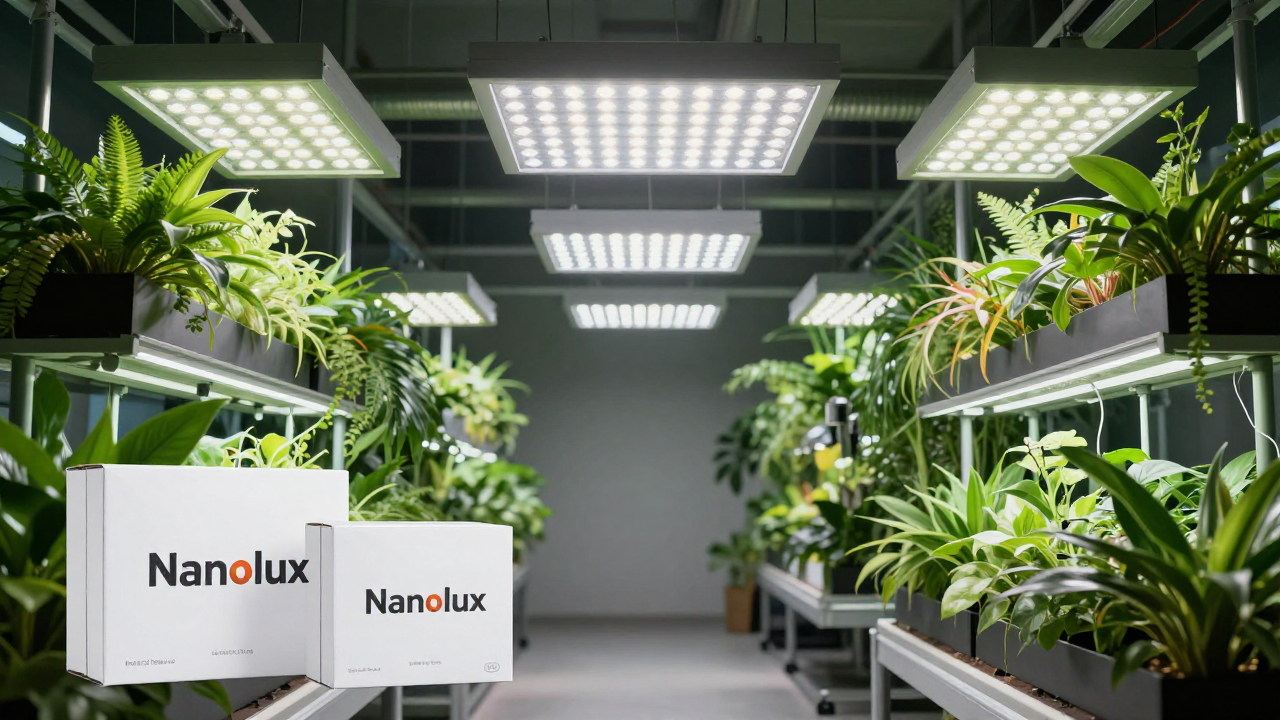
Buying Smarter, Not Harder: Where the Money Actually Leaks
Before we get into the nitty-gritty of spectral tuning and photon efficacy, I want you to pull up your last three electricity invoices. Not the total at the bottom — the *demand charge* line item. If you’re running a multi-tier vertical farm in Los Angeles County or a greenhouse range outside Phoenix, there’s a good chance 30-40% of that bill isn’t from total usage. It’s the penalty for when you pulled the power.
I learned this the hard way back in 2014, helping a San Diego cultivator retrofit 12 bays of double-ended HPS. We slashed his kWh consumption by 38%, but his bill only dropped 12%. The utility had him locked into a demand ratchet based on his historical peak draw from those old 1,000W magnetic ballasts. He was paying for ghosts. That single project reshaped how we approach commercial grow lights entirely — not as a fixture sale, but as a rate schedule negotiation tool with photons attached.
That’s the lens we’re using here. You’re a buyer. You’re staring at cut sheets that all claim 3.1 µmol/J and IP65 ratings. How do you separate the hardware from the hype?
The Spec Sheet vs. The 4-Year Spreadsheet
Industry-standard data from the DesignLights Consortium (DLC) horticultural qualified products list gives us a clean baseline. Typical 1,000W DE HPS systems output roughly 1,700-1,800 µmol/s and deliver around 1.5-1.7 µmol/J at the system level (lamp + ballast + reflector losses). A qualified 720W LED bar light pushing 2,300-2,500 µmol/s achieves 3.0-3.3 µmol/J. Raw physics: the LED produces 80-90% more photosynthetic light per watt.
But that’s the lab. A warehouse in Henderson, Nevada in August is not a 25°C sphere photometry chamber.
The comparison that matters looks like this:
Look at the “Usable Penetration” row. HPS sales reps used to map a 4×4 grid and show a blistering 1,200 PPFD center reading. What they didn’t show: the 380 PPFD reading in the corner, or the massive infrared spike cooking the top colas so you spent extra on plant growth regulators to keep internodes tight. The LED’s zonal uniformity — we typically map a target 800-1,000 PPFD across 90% of the canopy — changes your HVAC load because you’re not wasting 15% of your lamp output on 800-850nm wavelengths just for heat.
Here’s where buyers get ripped off. Some cut sheets list “Thrive Orange/Red” diodes with impressive efficacy numbers but zero LM-80 test data on those specific phosphor-converted chips. A DLC listing alone doesn’t guarantee longevity. The real question to ask: “Send me the ISTMT (in-situ thermal measurement test) results from your 6,000-hour life test.” If they stall, walk away.
Three Expense Levers Nobody Talks About in 2026
#### 1. The “Demand Destruction” Controller Logic
Most growers run lights during a 12-hour photoperiod at 100% intensity, synchronized across all rooms. That’s how you get demand ratchet penalties. A smarter approach — one we’ve been implementing since the release of the Nanolux NCCS controller in 2019 — is rolling start and zone-based intensity management.
Instead of all 200 fixtures igniting at 6:00 a.m. sharp, a 6 a.m. to 6:15 a.m. soft-start ramp in Room A, 6:15 a.m. to 6:30 a.m. in Room B, and so on, caps your 15-minute peak demand without compromising DLI (Daily Light Integral). A controlled environment farm in Tucson we worked with in August 2023 dropped their demand charge from $2,800 to $1,050 monthly by staggering 8 flowering rooms by 15 minutes. That’s $21,000 a year — no new fixtures, no exotic spectrum, just timing.
The key formula to keep in your back pocket when running scenarios:
DLI = (PPFD × Photoperiod in seconds) / 1,000,000
If you’re running 1,000 PPFD at 12 hours, your DLI is roughly 43.2 mol/m²/day. Tomato and cannabis crops thrive in that range. If a rep pitches full-spectrum “sunrise/sunset” red-only modes at 20% power for the first two hours, run the math: your photoperiod might still be 12 hours, but your effective DLI just dropped to 36 mol/m²/day. That low-intensity spectral play doesn’t offset the 17% reduction in yield-driving DLI. Save the spectrally complex timing for the last week of flower, not the whole cycle.
#### 2. The 8% That Kills You: Vertical Stacking & Photon Loss
Side-by-side systems in rack cultivation lose more light to wall absorption and fixture occlusion than any ballast inefficiency. We commissioned a third-party lab test in late 2022 — two shipping container setups, identical DLI targets, identical genetics (Green Butter lettuce, two cycles). The difference: one used white interior panels, the other standard brushed aluminum. The white-walled chamber required 14% fewer kWh per harvest head over the aluminum, simply because reflectivity at the 400-550nm range stayed above 90% versus the aluminum’s 78%.
When you’re comparing commercial grow lights for vertical racks, check the fixture’s beam angle specification. A 120° “wide” lens above a 4-foot shelf wastes 25% of its photons onto aisle walls. A 90° optic keeps more light on the leaf surface. Your fixture purchase price might be identical; your effective photon cost is not.
#### 3. Driver Remote Mounting: Buy the Fixture, Outsmart the Heat
Drivers fail because capacitors cook. An internal driver in a sealed fixture sitting in an 85°F canopy zone ages 2-3x faster than one mounted 20 feet away on a cool wall bracket. My rule of thumb: if you’re deploying over 200 fixtures indoors, demand remote driver configurations. The labor for running 20-foot BX cable extensions is a one-time cost. The saved replacement driver failures — typically at 18,000-22,000 hours in warm environments — pays for the extra wiring before year two.
This is one advantage of systems like Nanolux’s DEMON 2-Channel controller managing external drivers: if a driver in row 7 fails, you spot it from the dashboard and isolate that zone without killing the entire bench. No ladder, no oscillating fan in your face while troubleshooting a hot metal box at 9 p.m.
How I See a Purchase Order (A Decision Walkthrough)
A procurement VP asked me, in late 2024, to review three quotes totaling $340,000. She had a spread of Korean diodes, a U.S.-assembled option, and a low-cost Chinese import. My checklist was:
1. PPF and input power tested per ANSI/ASABE S640: Are those spec sheets self-declared or from a lab that’s ISO 17025 accredited?
2. Thermal pad, not thermal grease: Grease dries out. Are the LED boards using a phase-change thermal interface pad?
3. UL 8800 listing, full stop: Not “certified to.” The sticker must say UL 8800 for horticulture. Anything less is an insurance claim waiting to happen.
4. Output capacitor rating: 105°C-rated Japanese capacitors (Rubycon, NCC, Panasonic) or unknown 85°C no-names? This alone separated the first two from the third.
5. Warranty labor provision: Nanolux offers a 5-year or 50,000-hour warranty which covers parts, but our standard rate sheet for labor on remediation claims is a fixed $75 per hour, capped at $1,200 per incident — a number you can actually underwrite in an operational budget.
The Chinese import was $110,000 cheaper upfront. Its unscheduled mortality rate — based on forum tracking from a Florida berry grower and a Colorado cannabis operation — hit 6% by the 8,000-hour mark. A 6% failure rate across 400 fixtures means 24 dead units, 24 replacement labor calls during flowering, and potentially 24 microclimates in the canopy where DLI dropped undetected. The cost of the U.S.-assembled option? Higher per unit. The operations team chose it. They’re commissioning it now, in spring 2025. We’ll have real numbers by Q4.
Avoid this: I once toured a site in Michigan where a cultivator had mixed three different LED brands in a single 60-light veg room. Three spectra, three thermal profiles, three failure rates. The grow manager couldn’t optimize HVAC humidity setpoints because every brand’s leaf surface temperature differential was unique. The root zone EC kept fluctuating, the tissue samples came back wonky, and he chased his tail for six months. That wasn’t a lighting problem; it was a sourcing discipline problem.
What’s Coming: 2026 Procurement Signals
The DLC’s Horticultural Technical Requirements V3.1 draft that circulated in late 2024 tightens the allowable photosynthetic photon efficacy (PPE) variance for system-level tests. In plain English: manufacturers who cherry-picked golden samples for certification won’t pass the revised batch testing protocol. Expect some SKUs to quietly disappear from the QPL in mid-2026.
Sustainability reporting, once a novelty in CEA, is now being baked into REIT-level ESG compliance for greenhouse operators in New Jersey and California. The conversation isn’t “LED uses less power” — that’s table stakes. It’s about whether you can export an auditable energy dataset from your controller to show regulators, in real time, that your facility’s carbon intensity aligns with the state’s decarbonization pathway. If your current commercial grow lights system doesn’t support an open API for energy monitoring, it’s functionally obsolete by 2027 standards.
I recently saw a New Jersey gardener’s project where 300 perennial fruits were planted entirely by hand, the foundation laid over a single month. That pure manual effort highlights something easy to forget: the best lighting system in the world can’t fix poor planting stock or bad soil management. But once your agronomy is dialed, how you purchase and program your lights becomes the single biggest operational decision you’ll make — not because of the wattage, but because of the control architecture. You’re not just buying photons. You’re buying a decade of decisions about peak demand, heat management, and labor allocation. Price accordingly.
