
Discover the secrets to supercharging your indoor garden with commercial grow lights. This isn’t another fluffy overview—I’m going to answer the sharp, uncomfortable questions that actually keep cultivation directors up at night. No one hands out awards for owning the most expensive fixture, so we’re going to talk about what moves the needle: canopy coverage uniformity, energy efficiency that survives a utility audit, and the kind of yield consistency that makes your CFO stop asking questions. I’ve spent the last two decades inside commercial grows, from retrofitting old HPS rooms in Sacramento to designing under-canopy arrays for tiered vertical farms in Denver. Let’s cut through the noise.
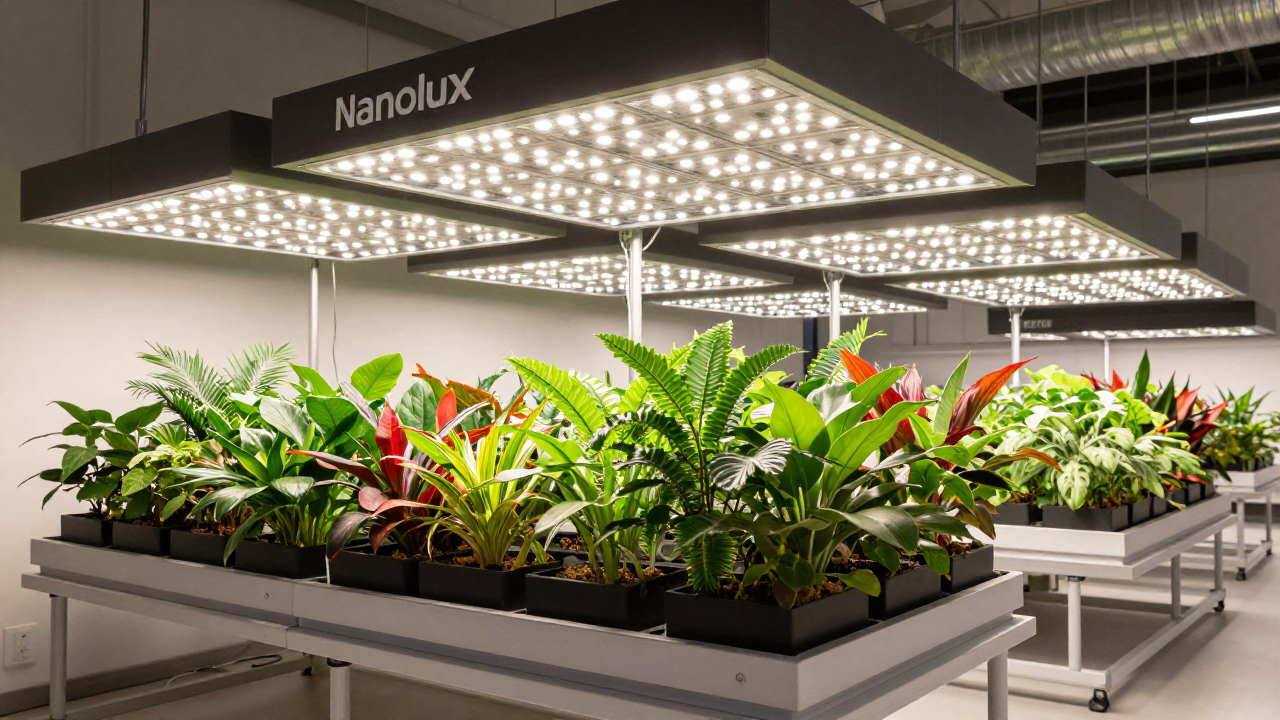
Are Commercial Grow Lights Actually Worth the Upfront Hit, or Is This Just Hype?
Short answer: if you’re still running magnetic ballasts from 2014, you’re burning money. But the math changes the moment you look at a five-year P&L instead of just the CapEx line.
We ran a retrofit analysis with a 20,000 sq. ft. flowering canopy in Michigan back in October 2022. The facility was swapping out 1,000W double-ended HPS for 645W LED bars. Upfront hardware cost was around $180,000—not pocket change. Direct energy draw dropped from 1,000W per fixture to 645W, plus another 15% reduction in HVAC load because the room stopped feeling like a pizza oven. Payback period clocked in at 14 months, and that was *before* the utility rebate from DTE Energy kicked in. Annual savings stabilized around $63,000 just on electricity.
That Michigan grow also saw a 9% uptick in total cannabinoid content by dry weight, which we attribute partly to more uniform light distribution and partly to the fact that the LEDs didn’t create the same leaf surface temperature spikes that HPS does. Plants spent more of their photoperiod actually photosynthesizing instead of going into heat-stress mitigation mode. So, is it hype? Only if you’re measuring ROI in weeks instead of harvest cycles.
LED vs. HPS vs. CMH: Which One Do I Actually Need for a Production Environment?
Forget the tribal warfare on forums. The right answer depends entirely on what you’re growing and what your existing infrastructure looks like.
If you’re in Humboldt County running a 4,000 sq. ft. greenhouse with supplemental lighting, you’re likely still fine with HPS—the sun does most of the heavy lifting, and the waste heat from the lamps keeps humidity in check during foggy mornings. If you’re building a new sealed indoor facility in Phoenix, Arizona, where ambient outdoor temps hit 115°F by July, you’d be insane not to spec LEDs. The cooling cost alone from HPS would eat your margin by the third month.
The trend that’s no longer a trend: dual-channel LED fixtures that let you shift spectrum remotely. A grower in southern Oregon reached out to us in March 2023 after his entire flowering room stretched into the trellis netting within the first 10 days post-flip. We helped him dial in a staggered spectrum scheduler—heavy blue early, then ramping red/far-red—and he pulled the canopy back under control without PGRs. That flexibility is something HPS simply cannot offer.
How Do I Read a Spec Sheet Without Getting Fooled by Marketing Numbers?
Most growers make exactly one catastrophic mistake here: they look at total PPF (µmol/s) and ignore distribution. A fixture that pumps out 2,000 µmol/s into a tiny hotspot directly underneath it while leaving the edges of a 4×4 tray at 300 µmol/s is going to give you a crop that looks like a topographic map of disappointment.
The number you actually need to obsess over is uniformity, expressed as a ratio or percentage across a defined footprint. Real talk: if a manufacturer won’t publish a PPFD map at a defined hanging height (say, 12 inches and 24 inches above canopy), there’s a reason. Typically, commercial facilities in the United States target a uniformity of at least 85% over a 4×4 ft area, with less than 15% variance corner-to-center.
Something else nobody tells you when you’re new: the DLI (Daily Light Integral) is your non-negotiable target, and you calculate it yourself. Onion growers in the Vidalia region aim for a DLI of 17-20 mol/m²/d, while a high-yield cannabis flowering room often pushes 40-45 mol/m²/d. The formula to keep in your back pocket:
DLI = PPFD × (3600 × photoperiod hours) / 1,000,000
If your spec sheet claims 800 µmol/m²/s average PPFD and you’re running an 18-hour veg cycle, that’s 800 × 64,800 / 1,000,000 = 51.8 mol/m²/d. That’s actually on the high side for veg unless you’re supplementing CO₂ aggressively. The point is, the spec sheet is just a starting point—your own DLI measurement under real-world conditions tells the truth.
What’s the Single Most Expensive Install Mistake I’m About to Make?
Running your lights before you’ve properly mapped out your HVAC and dehumidification capacity. We saw this in all its glory in February 2024, when an indoor salad greens operation in New Jersey fired up 280 LED bars in a sealed room with a 10-ton AC unit that was spec’d based on HPS numbers from a previous build. The grower assumed that because LEDs produce less radiant heat per watt, he’d be fine. By hour four on day one, the room temp hit 96°F and humidity spiked to 85%. Lettuce does not enjoy that.
The hidden culprit: with HPS, a huge chunk of the heat is radiant, shooting straight down and heating the leaf surface. With LED, the heat is convective—warm air rises off the fixtures and builds up at ceiling level unless you’ve got serious air mixing. That New Jersey facility ended up adding six high-capacity oscillating fans and a second 5-ton split unit at a cost of $14,000, completely avoidable.
Equally dangerous: mounting height. We regularly see people hang LEDs at 36 inches or higher because “the spec sheet says it covers a 5×5 area at that height.” Sure, it does, but your PPFD at the canopy edge drops off a cliff. Measure, don’t guess. At the Nanolux test facility in Sacramento, we map every new fixture with a spectroradiometer at multiple heights before releasing mounting guidelines, and even then, we tell growers to verify with a handheld PAR meter. If you don’t own one, buy one before you buy more lights. This is not a place to save $300.
Do I Really Need “Full Spectrum,” or Is That Just a Marketing Buzzword?
The term has become almost meaningless. Every LED these days claims full spectrum. What matters is the spectral composition—specifically, the ratio of red (660nm) to far-red (730nm) at flowering, and whether there’s enough blue (450nm) during vegetative growth to keep internode spacing tight.
If you’re growing high-wire tomatoes in a Dutch-style greenhouse, you want heavy red with a touch of far-red to encourage fruit set. If you’re running a cannabis cloning room in Portland, Oregon, you want a spectrum heavy in blue to suppress stretch and encourage root development. A single “one spectrum fits all” fixture usually ends up being mediocre across all stages.
Story that still makes me wince: in July 2021, a large vertical farm in Chicago spent $400,000 on fixtures that turned out to have almost no output below 450nm. Their basil crop bolted—literally elongated and flowered—by week four because the plants were basically in perpetual shade avoidance mode. They had to replace every fixture in the propagation bays with units that had 20% blue content by PAR. The manufacturer called it “full spectrum” on the datasheet. They weren’t technically lying—they just neglected to mention the dramatic drop-off at the short end.
Our approach at Nanolux, and the reason we moved to dual-channel controllers several years ago, was driven by precisely these kinds of failures we saw in the field. Giving growers the ability to shift spectral balance from a mobile app, without swapping fixtures, isn’t a gimmick—it’s a direct response to seeing too many crops wrecked by a static spectrum that was wrong for that particular week of the cycle.
Are There Any Brands That Actually Stand Behind Their Performance Claims?
Not many. I’ve been doing this since 2004, starting out in a small warehouse in California when most indoor grows were still running T5 fluorescents and magnetic HID ballasts, and I’ve watched brands appear and disappear like mayflies. The ones that last tend to be the ones that treat their datasheets as legal documents, not marketing brochures.
A customer in Grand Rapids, Michigan, called in January 2024 after his previous vendor’s 650W LED bars started dropping output by 15-20% within six months. He sent us photos of the PAR maps—total disaster. That vendor had no third-party LM-79 or LM-80 testing data available, and their warranty process turned into a game of email tag. These are the moments where a brand’s reputation crystallizes. By year two, underperforming fixtures cost you more in lost yield than you saved on the purchase price.
We encourage growers to ask three questions before signing a PO:
1. Can you provide independent photometric test reports (LM-79) for the exact model I’m buying, not a prototype?
2. What is the L90 rated lifespan under actual operating temperatures, not warehouse conditions?
3. If a driver or bar fails mid-cycle, how fast can you get a replacement to my loading dock?
In our own support logs, the average emergency replacement from our Reno warehouse hits a customer’s door in Michigan or Colorado within 48 hours. That’s not marketing fluff; it’s the result of keeping buffer stock and putting the distribution center within two-day ground of most major cultivation clusters. Commercial production doesn’t pause while you wait for a part to clear customs from Shenzhen.
User reviews that mention “this fixture runs 3°F cooler than the previous brand” or “we pulled 3.2 lbs per light for the first time” are far more useful than anything on a spec sheet. I’d recommend finding a grower on LinkedIn who’s been running the fixtures for at least two cycles, DM them, and ask the one question no sales rep wants you to ask: “Would you buy these again if you were building out a new room tomorrow?” That answer will tell you everything you actually need to know.
